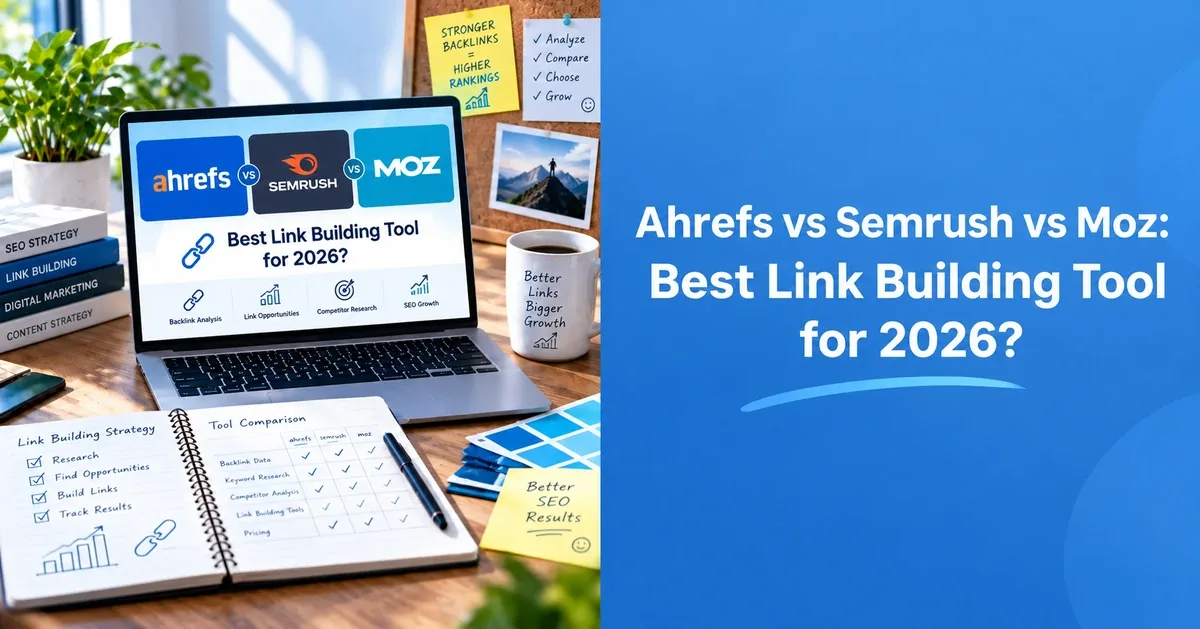
Ahrefs: Depth and Speed of Data
Ahrefs built its reputation on backlink data. The index is large, updated often, and the interface doesn't waste your time — you search a domain, get referring domains, anchor text, lost links, all fast. Agencies doing high-volume outreach lean on it because the crawler catches new links quickly. Downside: pricing climbs once you need more seats or higher crawl limits. Small teams feel that pinch.
Semrush: The All-in-One Bundle
Semrush plays a wider game. Link building sits inside a bigger suite — content, PPC, rank tracking, site audit — so if you're already using it for keyword research, the backlink tools come along for free, sort of. Its Link Building Tool suggests prospects based on competitor gaps and sends outreach emails from inside the platform. Convenient. But the backlink index itself doesn't always match Ahrefs in raw depth. Some SEOs run both — Semrush for planning, Ahrefs for verification.
Moz: Simplicity Over Flash
Moz is the old guard. Domain Authority came from Moz, and plenty of clients still ask for it by name, even though Google never confirmed using it as a ranking signal. Link Explorer is decent, not flashy, but Moz's real strength now is simplicity — smaller learning curve, calmer interface, good for teams that don't want to drown in fifteen tabs of data. Budget-conscious agencies still pick it for that reason alone.
You have to choose the right SEO tool before you invest; that's the whole point here, not the brand name on the login screen.
Cost and Workflow Fit
Cost matters more in 2026 than it did a few years back, plain and simple. Budgets got tighter, tool stacks got audited, and nobody wants to pay for three overlapping subscriptions anymore. So the real question isn't "which tool is best": it's which one matches your actual workflow.
- If you're doing manual outreach at scale, Ahrefs' data depth pays for itself.
- If you're a smaller shop juggling content and links together, Semrush's bundling saves money and time.
- If you're client-facing and clients care about a recognizable metric, Moz still has a place.
Nobody should buy blind. Try the trial, run your own domains through all three, compare what actually shows up. Differences in backlink counts between tools are common and can be significant.
That's not a flaw exactly; it's just how each crawler samples the web differently. Trust the overlap; be skeptical of huge gaps.
Link Quality in the AI Search Era
One thing worth noting: AI-driven search results have changed how backlinks get evaluated, at least in theory. Some SEOs argue link quality now matters more than volume, since search engines are getting better at spotting manipulative patterns.
All three platforms have adjusted their spam-score or toxicity metrics accordingly.
- Ahrefs, with its domain rating recalibrations
- Semrush with toxic link flags.
- Moz with spam score.
None of these is a perfect predictor. Use them as a rough filter, not gospel.
Support and Learning Resources
Support and documentation differ, too, and this gets overlooked. Ahrefs has strong self-serve resources: blog posts, YouTube, active community — but live support can be slow depending on your plan tier. Semrush pushes webinars and structured courses through Semrush Academy; it's decent if you're training junior staff.
Moz leans on its blog history; Whiteboard Fridays built a whole generation of SEOs though newer content has slowed some.
Reporting and Agency Fit
For agencies specifically, integration with reporting tools tips the scales sometimes. Semrush plays nicer with white-label reporting out of the box. Ahrefs requires more manual export work, though its API is solid if you've got dev resources to build custom dashboards. Moz sits in the middle, functional but not remarkable in either direction.
What These Tools Don't Do
None of these tools build links for you. That's the part people forget. They surface opportunities, track competitors, flag toxic links; the actual outreach, relationship-building, and content creation still fall on a human. A great tool with a lazy strategy gets you nowhere; a mediocre tool with sharp outreach still wins links. Keep that straight before blaming software for slow results.
Which One Should You Pick?
So — 2026, which one wins? It depends on who's asking. Solo consultants often go with Moz or a lighter Semrush plan, since cost per seat matters more than raw depth. Growing agencies usually land on Ahrefs once volume picks up; backlink freshness becomes non-negotiable at that point. Enterprise teams running content, paid, and SEO together tend toward Semrush simply because unifying data reduces the headcount needed to manage multiple logins.
Nobody's wrong here, really. Test all three against your own domain, your competitors, your actual link targets, not against a review blog's opinion, including this one. Numbers will differ, sometimes wildly, and that's fine. Pick the one whose data you trust enough to act on, and whose interface doesn't slow your team down. That's the real benchmark, not brand loyalty or which one has the flashiest dashboard this year.