



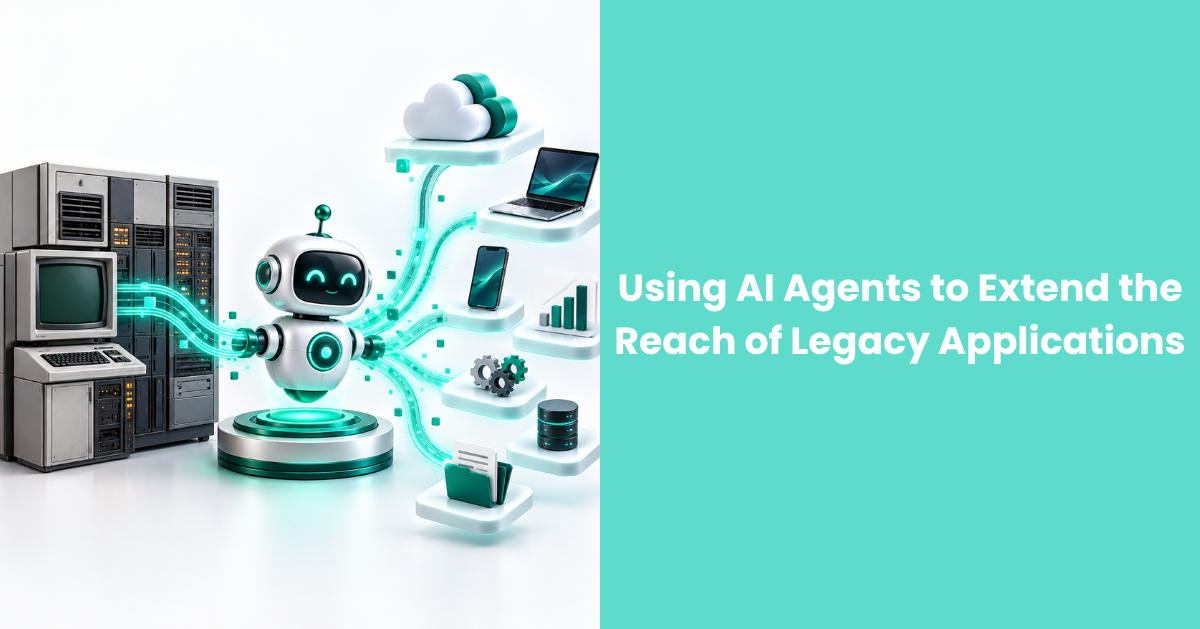
Using remote application delivery, an organization can provide its employees with secure access to Windows applications while using other applications of its choice. Thus, remote application delivery provides a practical way to connect reliable business applications with newer artificial intelligence technologies.
Why Legacy Applications Still Matter
Older applications, over the years, become an integral part of the business. Employees become skilled in using these applications, and the organization might also have a large volume of data stored within them. Replacing these applications could require significant investment and may involve extensive business process reengineering.
For this reason, modernization does not always need to begin with completely replacing existing software. Instead, business process reengineering can focus on improving key processes and integrating new applications to address changing organizational needs.
Depending on the business situation, existing processes, and the flexibility of employees, AI agents may help prepare management reports, summarize data, classify information, or assist employees with routine tasks. This allows organizations to introduce AI capabilities while continuing to rely on familiar systems.
Integrating AI With Legacy Applications
A major challenge for modern businesses is connecting recent developments in AI with older software applications. New frameworks and design patterns have enabled applications with strong integration to cloud services, APIs, automation platforms, and modern data environments.
Older Windows applications may have limited integration with cloud services, if they have any at all. Some may also depend heavily on desktop interfaces or technologies that were developed long before today's AI ecosystem became widespread.
When direct integration is difficult, organizations may need to implement automation and integration solutions to bridge the gap. In some cases, older data can be exposed through APIs, allowing newer applications to communicate with established systems. However, integrating older software with newer platforms is not always straightforward or technically feasible.
Extending the Capabilities of Existing Software
Modern frameworks, technologies, and integration patterns can help older systems support new business requirements. However, the overall objective should be to improve and extend the functionality of legacy systems rather than replacing reliable software without a clear business reason.
AI agents can work alongside existing applications by handling specific tasks around them. For example, an AI system might summarize information produced by an established application, assist employees in finding relevant information, or automate repetitive activities that previously required manual intervention.
This approach allows organizations to introduce intelligent capabilities gradually while maintaining established business processes.
The Role of Remote Application Delivery
Remote application delivery makes it possible for organizations to provide access to a greater number of business applications from centralized environments. As businesses explore cloud technologies and newer AI-based process models, remote application delivery can provide a practical way to maintain access to existing Windows applications.
Employees can continue using familiar applications while organizations introduce newer tools and workflows. This can give teams more time to adjust to new technologies instead of requiring every application to be replaced simultaneously.
Centralizing application access can also simplify provisioning and administration of access controls. With appropriate technology, an organization can manage software and access policies from a controlled location. This can help address some of the challenges associated with maintaining software across numerous devices.
Phased Modernization Can Reduce Disruption
Modernizing an enterprise application portfolio can be disruptive. A less disruptive approach can be to implement modern technologies, including AI, in phases to achieve continuous business process improvements.
One example could be automating a process that currently requires an employee to read, organize, or summarize information captured in a business application. Once that process has been successfully improved, an organization can identify additional opportunities for automation and integration.
Avoiding unnecessary disruption can be an important goal of an enterprise-wide modernization initiative. Depending on the organization's priorities, modernization may involve improving integrations with third-party business applications, connecting existing systems to modern APIs, or introducing new data and automation capabilities.
Learning and Improving at Every Stage
A phased modernization strategy allows companies to learn and address technical or operational issues at each step. This can help reduce risks for employees and the organization as a whole, particularly when a new system or automation process does not initially work as intended.
Instead of committing to a complete transformation immediately, businesses can test individual improvements, measure their results, and then decide how to proceed with subsequent stages.
A Practical Bridge Between Old and New
The integration of an AI agent with a legacy software application does not need to be an all-or-nothing proposition. The two can coexist, with legacy software continuing to support core business processes while AI agents extend and enhance those processes.
The use of remote application delivery, automation layers, APIs, and integration technologies can give businesses more flexibility in their software modernization journey. Each organization can determine the appropriate speed and extent of modernization according to its operational requirements.
As AI agents continue to become more capable, additional automation and integration options will become available. Businesses do not necessarily need to take a completely new approach to every technological development. They can continue relying on established systems while gradually introducing new capabilities when there is a clear business need to do so.
