


Key Applications of AI Across Logistics Operations
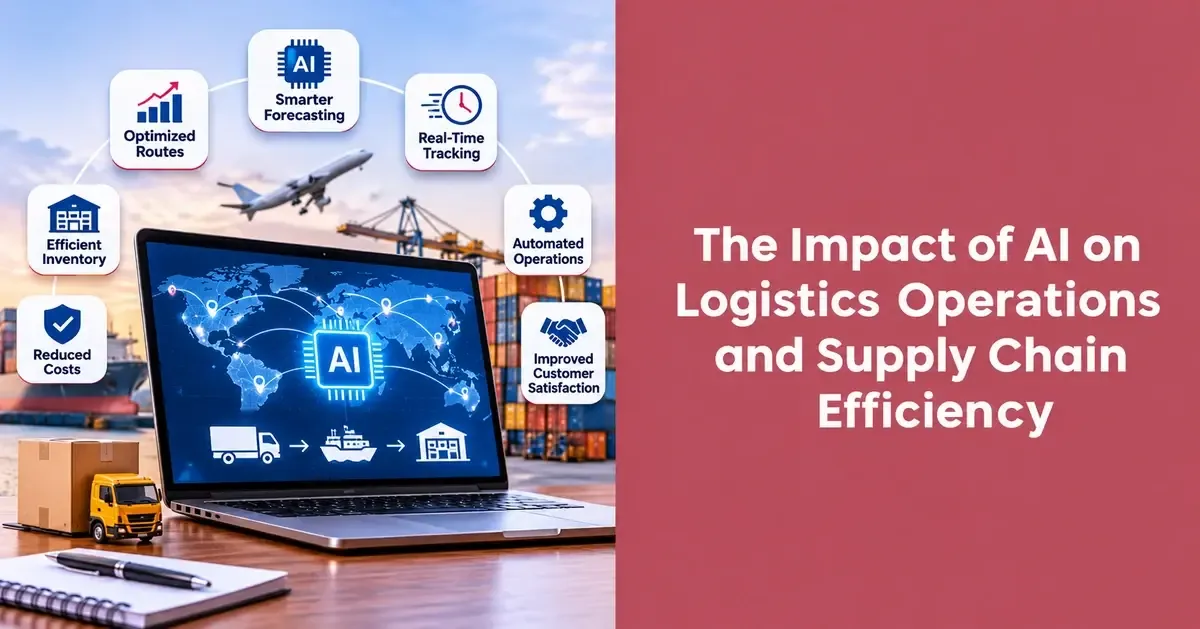
The use of AI in logistics is not a singular tool but is a range of skills used at various points in the process, and all focus on reducing particular costs and delays. There are three main areas where this applies to the majority of businesses, and all can be implemented gradually.
Demand Forecasting and Inventory Planning
The machine learning models take into account the sales history, seasonality, marketing campaigns, and the weather to forecast the volumes. Then, instead of stocking and staffing based on the average sales of the previous year, the planners can plan according to the actual demand, thus minimizing the risk of stockouts and overstocking. The forecasts can be used for planning the layout of warehouses, staffing levels, and replenishment cycles at the same time.
Route Optimization and Fleet Efficiency
The algorithms use parameters such as traffic, time windows, capacity, and fuel consumption to formulate routing that adapts through the course of the day. Fewer dead miles and improved loading help to reduce transport costs. Dynamic scheduling also helps to decrease failed attempts at deliveries, and predictive maintenance turns breakage into scheduled service.
Generative and Agentic AI
This is a completely AI-based process. The language model and the AI agent process the shipping documentation, respond to the carriers' and customers' questions, generate the exceptions report, and undertake tasks like re-booking a consignment. It differs from rule-based systems in that they can process unstructured data, like emails, PDF, and bill of lading, where most of the manual work in logistics remains.
How AI Enhances Supply Chain Visibility and Decision-Making
Visibility used to mean knowing where a shipment was. With AI, it means knowing where it will be and what to do about it. Models combine carrier data, traffic, port congestion, and weather to give arrival estimates that update continuously, so customers receive accurate promises instead of optimistic ones.
Decision-making processes get better the same way. Rather than constantly analyzing the dashboards for the entire day, the team gets notifications only when the shipment, supplier, or stock deviates from its normal levels. Thus, attention is paid only to the small number of issues that actually need attention. AI can be used to analyze current news, financial signals, and performance metrics to alert planners about any supplier or lanes that have become unreliable. Scenario planning helps them understand the consequences of different actions.
The payoff is measurable. The same research reports that AI-driven solutions can reduce logistics costs by 15% and improve delivery reliability by up to 20%. Better visibility also supports sustainability goals, since fewer detours and less idle time mean lower fuel use and emissions.
The Role of AI-Powered Software in Logistics Process Automation
Models only create value when they sit inside software that people use every day. Businesses that want this layer built around their own workflows often work with providers of logistics AI services to connect forecasting, routing, and document handling in one system. Once that foundation exists, automation replaces repetitive steps such as:
- Extracting and validating purchase order data instead of re-keying it by hand
- Matching freight invoices against contracted rates so only mismatches go to a person
- Adjusting dock and yard appointments to live arrival times, which cuts detention charges
- Sending shipment status updates to customers without a service agent involved
- Scoring carriers on price, transit time, and past performance for each load
Each step removes hours of low-value work. Staff then spend their time on carrier negotiations, exceptions, and customer relationships, where human judgment still matters most. Faster processing also shortens order-to-delivery cycles, which customers notice. The strongest results appear when these tools connect with existing transport, warehouse, and ERP platforms through APIs, so data flows once and every team works from the same picture.
Challenges and Considerations for AI Adoption in Logistics
The success of any AI solution hinges greatly on the preparatory work, and data tends to be the most frequent barrier. According to a survey done by Deposco and Fulfillment IQ, 78% of executives maintain their own individual systems for inventory management, ordering, logistics, and planning. If the model training occurs on siloed data, it will yield fragmented insights, thus requiring a consolidation of data before anything else.
People and cost matter just as much. Dispatchers and planners need to trust model recommendations, so early involvement, training, and clear override rules help adoption. Businesses should also compare total cost of ownership, since licensing, cloud usage, and customization add up quickly, and favor open standards so the system can evolve without a full rebuild. Shipment and customer data is sensitive too, which calls for access controls, audit trails, and vendor reviews.
Finally, broad rollouts without baselines make results hard to prove, so it helps to start with one lane, warehouse, or process and measure it. Choosing an experienced logistics application development company can reduce these risks, since integration and data design are usually where projects succeed or stall.
Conclusion
Before proceeding with any investments, select an expensive, repeated issue, for instance, delayed deliveries in one route or excessive inventory of one group of goods. Take into account its existing cost, conduct a 90-day pilot project and evaluate the outcome with regard to the starting point. This way, the management will have numbers to support its scaling process, while the team will learn how to operate in their own conditions without any extra costs. Evaluate the results of the pilot project by involving the warehousing, transportation and financial teams to see their advantages.