


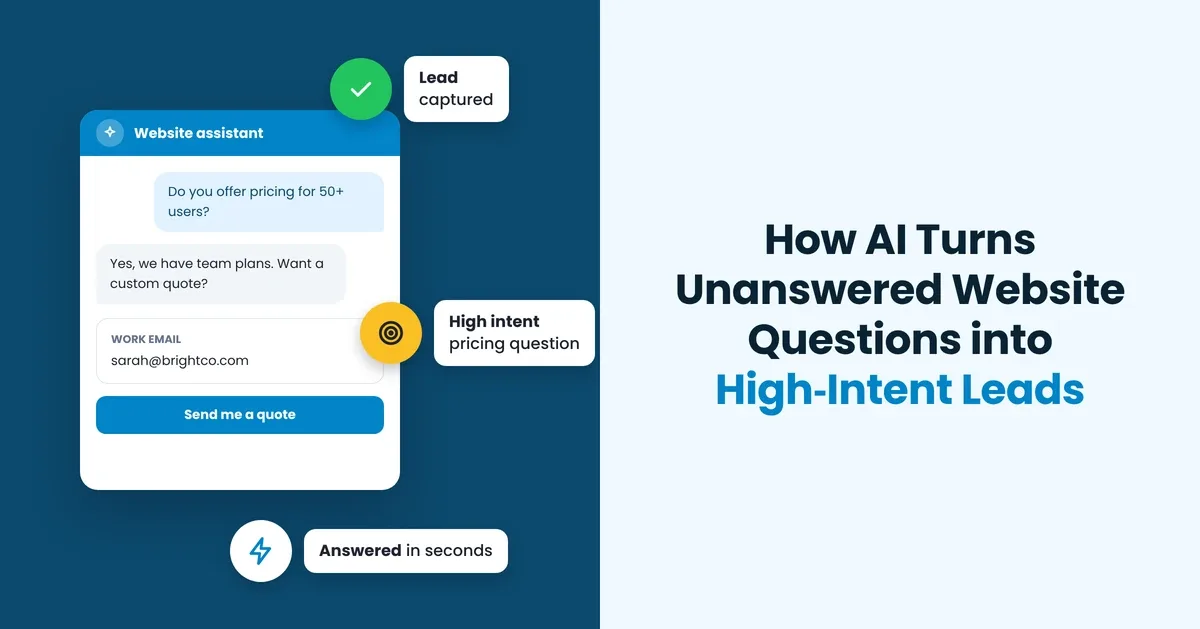
AI website assistants can prevent that lost opportunity by interpreting questions, responding from approved site content and inviting qualified visitors to continue the conversation. The result is a more useful customer experience and a steady source of high-intent leads.
The Modern Search Behavior Shift
People now expect search tools to understand complete questions and return direct, relevant answers. Google’s analysis of AI-powered search behavior shows how AI is helping consumers express more detailed needs and explore subjects through follow-up queries.
That expectation carries over to business websites. A visitor may ask, “Can your team complete this service within two weeks?” or “Which plan supports five locations?” These questions reveal urgency, scope and buying intent. Review your sales calls and contact forms to identify the 20 questions that appear most often, then make sure your website’s AI system can answer each one using current, approved information.
This shift also changes how businesses should structure website content. Instead of relying only on short keyword-focused pages, companies need clear explanations that answer real customer questions in natural language. Detailed service pages, comparison content and well-organized FAQs give both visitors and AI tools more context to work with. The easier it is to understand who a service is for, what it includes and what happens next, the easier it becomes for an AI assistant to return a useful answer without sending the visitor through several pages first.
Keeping AI Answers Accurate and On-Brand
An AI assistant is only as useful as the information it can access. If service pages, pricing details or policy information are outdated, the assistant may repeat those same errors to visitors. Review the content it uses as a source and remove anything that is no longer current before launch.
Tone matters too. The assistant should sound like the rest of the website rather than switching between overly formal, technical or generic responses. Give it clear guidance on how to describe services, how much detail to provide and which claims it should avoid making without human review.
Set boundaries for uncertain questions. When the assistant cannot confirm an answer from approved content, it should say so and offer a next step instead of guessing. That might mean directing the visitor to a contact form, live chat or sales representative.
Regular testing helps catch problems early. Ask the assistant common sales questions, vague questions and edge-case questions each month. Compare its responses with current site content and update the source material whenever the business changes pricing, availability, policies or service details.
Why Static FAQ Pages Fall Flat
A useful FAQ page still supports search visibility and gives visitors a quick reference point. Guidance on high-performing FAQ content recommends clear organization, concise answers and language that reflects real user questions. The limitation is that visitors must find the right page and recognize which listed question matches their situation.
An AI assistant turns the same website knowledge into an interactive resource. For businesses, agencies and multi-brand teams, the Next Day Sales platform can answer questions from existing site content, capture lead details and analyze customer interactions. Before launching any assistant, remove outdated claims and assign someone to review source content regularly.
Capturing Qualified Leads Through Dialogue
Lead capture works best when it follows a useful exchange. Asking for an email address before providing any value can feel intrusive, while a timely invitation after two or three relevant answers feels connected to the visitor’s goal.
Suppose a prospect asks about availability, service area and implementation time. After answering, the assistant might offer to send a tailored estimate or arrange a callback. The form can request a name, work email and one qualifying detail such as company size. Keep the handoff specific so the sales team receives the conversation history. Businesses spending heavily to attract visitors should also examine why high-intent leads fail to convert before increasing campaign budgets.
Designing a Smooth Human Handoff
AI assistants work best when they know when to stop answering and bring in a person. Some questions involve pricing exceptions, custom requirements, technical limitations or sensitive account details that should not be handled through an automated response alone.
Create clear handoff rules for those situations. The assistant can offer to connect the visitor with sales, support or another relevant team while passing along the conversation history, contact details and key qualification information already collected. That prevents the customer from repeating the same questions after switching channels.
Response timing matters too. If a visitor asks for a callback, set expectations about when someone will follow up and route the request to the correct person immediately. High-intent conversations should not sit in a general inbox where they can be overlooked.
Review handoff data alongside lead quality. If the assistant frequently escalates the same question, the website may need clearer content or updated product information. A well-designed handoff process keeps automation useful without making visitors feel trapped in a chatbot when they need a real person.
Closing Information Gaps in Real Time
Customer questions expose gaps that page-view reports may miss. If 15 visitors ask about weekend support and the website never addresses it, that pattern gives your content team a clear assignment. The answer could become a service-page update, a new FAQ entry or material for an email campaign.
Set up a weekly review of unanswered questions, low-confidence responses and conversations that ended without a lead submission. Group them by topic and commercial intent. Correct factual gaps first, then improve answers that create confusion. Give the assistant a clear fallback response when approved information isn’t available, including an option to reach a person. This prevents invented answers while preserving the opportunity.
The best measure of an AI website assistant is the quality of the conversations it creates. Track which questions appear before form submissions, booked calls and qualified opportunities. Those patterns will show where visitors need reassurance and which answers help them take the next step.