



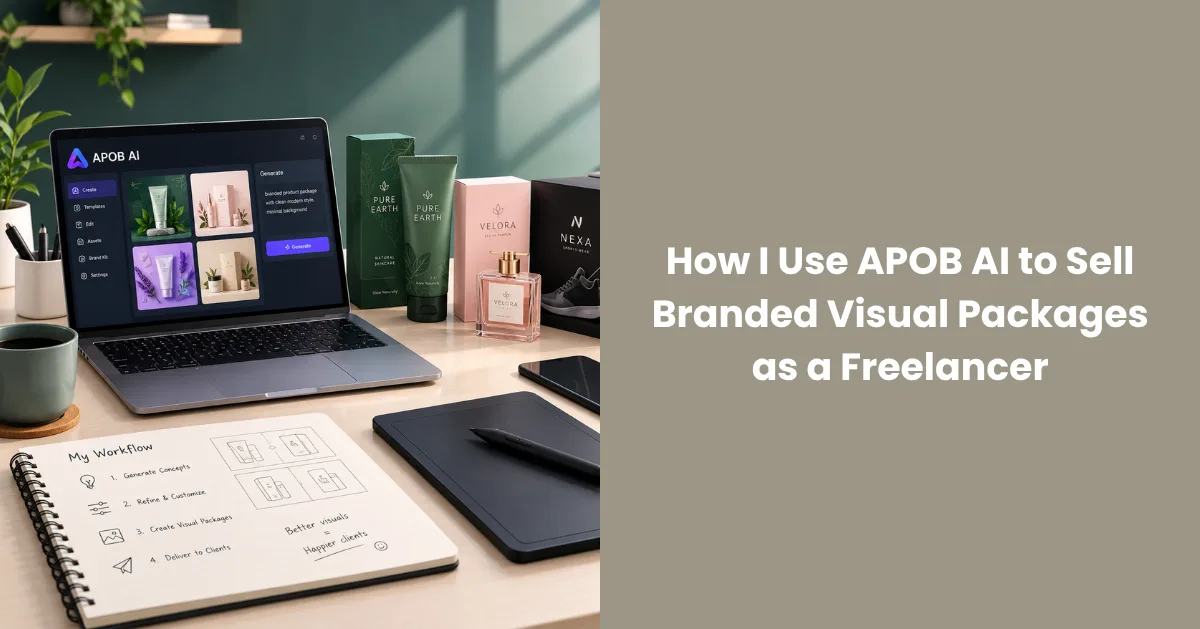
My workflow turns one approved concept into a website hero, social visuals, campaign banners, and a reusable style direction. The value is not one lucky output. It is a repeatable process that helps a solo freelancer deliver more assets without making the client manage the tool.
Start with an offer clients can understand
I package the work around an outcome: a launch kit, a monthly content pack, or a creator identity package. Each offer defines the number of concepts, included formats, revision limit, delivery time, and final files. That makes the service easier to quote and prevents endless “one more version” requests.
The client approves a short brief first. I then create the master visual, request focused feedback, and only after approval build the extra formats. This protects margin because I am not recreating five channel assets every time the direction changes.
Turn one brief into five billable deliverables
1 Sell a focused launch brief
The paid brief captures audience, offer, channel, subject, mood, colors, required sizes, and elements to avoid. Even a one-page brief adds value because it shows the client that the project is being directed, not randomly generated.
2 Build a recognizable visual identity
A recurring face or character can anchor a creator brand, product launch, or social campaign. I lock the subject first, then vary the scene and composition so every asset feels connected instead of looking like it came from a different campaign.
Teams can use an AI image generator designed for consistent visual creation as the production surface, while their own application keeps the campaign brief and approval history.
3 Produce channel-ready variations
I decide the master ratio, quality, number of options, and expected credit cost before generating. That keeps production predictable. Once the direction is approved, I prepare the formats the client actually needs instead of spending credits on unfocused variations.
4 Charge for professional review
Human review is part of the service. I check hands, faces, accidental text, trademark-like shapes, crop safety, and whether the scene supports the client’s message. The client is paying for a usable asset, not direct access to every draft.
5 Reuse across channels a reusable mini-library
The final delivery includes the approved master, channel crops, filenames, usage notes, and the chosen visual direction. A tidy folder makes a small project feel like a professional brand system and creates a natural reason for the client to return for monthly updates.
How I create the client asset in APOB AI
For this freelance brand-package example, I used the Valeria Community Model and built a realistic scene of a creative consultant presenting campaign assets. The process below is the same one I would show a client when explaining how the concept was produced and reviewed.
- Choose Valeria from Community Models to give the visual package a consistent, recognizable subject.
- Open Image, choose Generate image, and keep the job focused on the paid deliverable.
- Describe the business result, scene, included deliverables, mood, and exclusions. Here the prompt asks for a freelancer presenting a polished brand package with no logos or watermark.
- Set one 16:9 image in Ultra 4K and review the displayed 36-credit cost before generating.
- Generate the visual, inspect the result at full size, and use Chat to edit, Upscale, Reuse, or Download only after it fits the client brief.
Turn the workflow into a profitable freelance offer
A starter offer can include one creative direction and three ready-to-use formats. A higher tier can add more campaign assets, additional ratios, and a second round of revisions. A monthly retainer can refresh the approved visual system without rebuilding the strategy every time.
Profit comes from limiting uncertainty. I define the number of directions and revisions, approve the master before creating variants, and price the package around the business use of the assets. The software cost is only one small part of the fee; the client is also buying direction, selection, quality control, and delivery.
This also creates a strong upsell path. A client who starts with a hero image may later need ad banners, product-launch visuals, social crops, and recurring seasonal updates. The same approved identity can support each additional package.
Add a higher-value banner upsell
Once the master visual is approved, an AI banner generator can turn the same concept into campaign-ready compositions for web promotions, launches, and display placements. The important design choice is to derive those formats from an approved source image and a channel brief, instead of starting every banner from a new prompt.
This keeps the client’s identity stable while changing the composition for each placement. The freelancer can charge for the original creative direction and then add channel packs without restarting the project from zero.
What I deliver to the client
- A one-page creative brief and the approved visual direction.
- A high-resolution master image plus the agreed channel formats.
- Clear filenames and separate folders for drafts and final assets.
- A quality check for anatomy, accidental text, logos, crops, and brand fit.
- One included revision round with extra revisions priced separately.
- An optional monthly refresh or campaign add-on for recurring income.
Final takeaway
APOB AI shortens production, but freelance value comes from a clear brief, an approved direction, quality control, and usable files. Package those outcomes—and one project can lead to recurring campaign work.


