



Much of that work is repetitive, which makes it a natural candidate for automation. The sections below cover the cost of manual dues cycles, reminder schedules that work, the role of management solutions and payment tools, the way billing communication shapes member attitudes, and how reporting helps return staff time to relationships. The audience is anyone who has spent a December evening matching checks to invoices.
The Hidden Cost of Manual Dues Cycles
A manual dues cycle looks inexpensive because no software invoice is attached to it. The true cost shows in hours. Preparing invoices for several hundred members, sending them in batches, logging payments, and answering questions can fill weeks of a part-time employee's schedule. When the same person also manages events and communications, other work slides.
Errors creep in as well. A member is billed at last year's rate, an invoice goes to a former contact, or a payment is applied to the wrong account. Each mistake generates a phone call, a correction, and a small dent in the member's confidence. Cash flow suffers too: when invoices go out late, money arrives late, and the chamber's budget for programs tightens.
There is a human cost. Staff who dislike chasing payments may delay follow-ups, which lengthens the gap between invoice and payment. Members who feel nagged or confused may postpone renewal further. Counting the hours, the error rate, and the average days to payment gives leaders a baseline. Many chambers find that a large share of their staff capacity during the renewal season goes to tasks a system could perform, and that realization often motivates a change.
Members bear a cost as well. A confusing invoice, a mismatched amount, or a payment that was received but not recorded forces a business owner to spend time on the chamber's mistake, which is not the experience a membership organization wants to create.
Reminders That Get Dues Paid
Reminders work when they are timely, predictable, and polite. A simple schedule gives members multiple chances to act without feeling pressured. One common pattern runs as follows:
- Sixty days before the due date: a heads-up message with a summary of the year's benefits
- Thirty days before: the invoice with a direct payment link
- Seven days before: a short reminder
- On the due date: a confirmation that payment is due today
- Seven and twenty-one days after: friendly follow-ups, with a personal call for larger accounts
Wording changes the response. Messages that state the amount, the due date, and how to pay in the first lines get faster action than long narratives. A named sender, such as the membership manager, feels more personal than a generic notice. Subject lines that include the company name or the word "invoice" help prevent messages from being overlooked.
Segmentation adds flexibility. Long-standing members might receive a thank-you and a lighter reminder cadence, while new members may need more explanation about what is included. Board members or sponsors whose renewals carry strategic weight can be flagged for personal outreach. Whatever the schedule, automation should stop messages once payment posts, so members who already paid never receive a follow-up.
Testing the sequence before launch avoids embarrassing errors. Send each message to a few staff members and check links, merge fields, and stopping rules after a test payment.
Management Solutions and Payment Tools
Reminders and invoices work best when they come from the same system that holds membership records. A platform for chamber of commerce management can connect the member database to billing and keep each invoice aligned with the right membership level, contact, and price. These platforms often include online payment pages, receipts, and reporting, which removes the need to stitch several products together.
Payment flexibility is a major factor in collection speed. Offering card and bank transfer options through a secure online page lets members pay in a minute. Recurring payments suit small businesses that prefer to spread dues across the year, and stored payment methods, with consent, make the process automatic. Staff should see payment status in real time and be able to record offline payments such as checks in the same place.
When comparing these platforms, leaders should check a few practical points: how fees for payment processing are handled and who bears them, whether invoices can be customized for different membership levels, how failed payments are retried, and how the system connects to the chamber's accounting software. Ask for a demonstration of a full cycle from invoice to reconciled payment, and speak with other chambers about their experience during the first renewal season.
Security deserves a mention too: payment pages should be hosted by a reputable processor so that the chamber never stores card numbers itself.
Billing Communication That Builds Goodwill
An invoice is also a message. Members read it as a signal of how the chamber regards them: as a customer, an annoyance, or a partner. A clear, friendly invoice that lists what the dues support, the date, and a contact for questions reflects well on the chamber and reduces confusion.
Pairing billing with value reminders helps. A short note listing events attended, referrals received, and programs the chamber ran in the past year reminds the member why they belong. For members who have been inactive, the same note can include an invitation to a specific upcoming event, so the renewal conversation looks forward as well as back.
Tone matters during late payment follow-ups. Assume an oversight before assuming reluctance, and offer help, such as a payment plan for a member facing a difficult quarter. Honest conversations about cost often reveal useful feedback about programs. Receipts and confirmations should arrive promptly, since members who pay and hear nothing worry that their payment was lost. Consistent language across email, invoices, and phone calls prevents mixed messages that undermine trust.
Disputes should have a clear path. A named contact, a response time, and a simple way to request an adjustment keep a billing question from turning into a complaint about the chamber.
Reporting and Reclaiming Staff Time
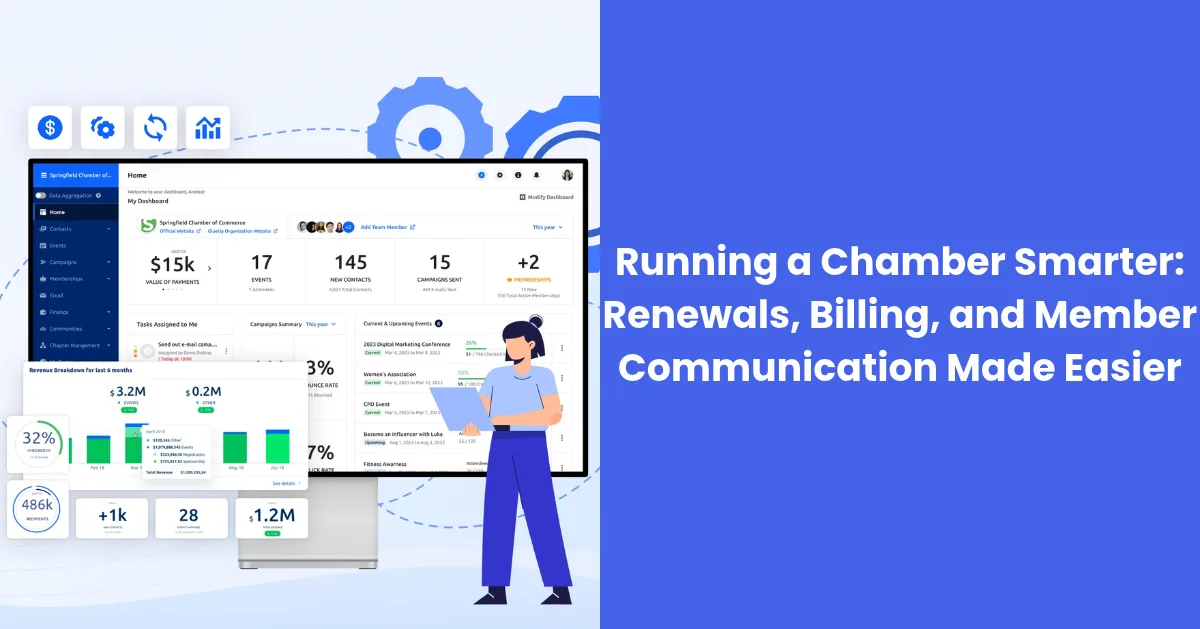
Automation produces data as a by-product, and that data supports better decisions. Dashboards showing invoices sent, paid, and overdue let the executive director see where the dues cycle stands without asking for a spreadsheet. Trend reports on renewal rates by level, join date, or industry reveal which segments are stable and which need attention.
Time savings should be directed deliberately. If automation removes ten hours a week of invoice handling, those hours can go to member visits, welcome calls, event planning, or business advocacy. Without a plan, the time tends to be absorbed by other administrative tasks. Setting a goal, such as contacting every at-risk member each month, turns saved time into measurable value.
Treasurers and boards also benefit. Accurate aging reports and cash forecasts make budgeting less speculative. Reconciliation becomes a review of exceptions, not a line-by-line search. Periodic audits of the automation itself remain wise: check that reminder timing is correct, that cancelled members no longer receive invoices, and that fees are calculated properly. A quarterly review of the settings takes little time and prevents quiet errors from accumulating.
Share a summary with the board after each cycle: dues collected, days to payment, renewal rate, and time saved. Concrete numbers turn an operational improvement into a story the board can understand and support.
Key Takeaways
A smarter chamber treats dues collection as a process to design, not a seasonal scramble. Clear reminder schedules, online payment, a shared member record, and thoughtful billing language make payment easy and keep the relationship warm. Reports show where the process works and where it stalls.
The strongest gain is time. When invoices send themselves, payments post automatically, and reminders stop when they should, staff can focus on the work members value most: connecting businesses, solving problems, and representing the community. That shift is worth more than the hours saved on paper.
A good first step is to document the current dues process on a single page, from invoice to reconciliation. Seeing every handoff written down shows which steps can be automated and which still need a person.


