



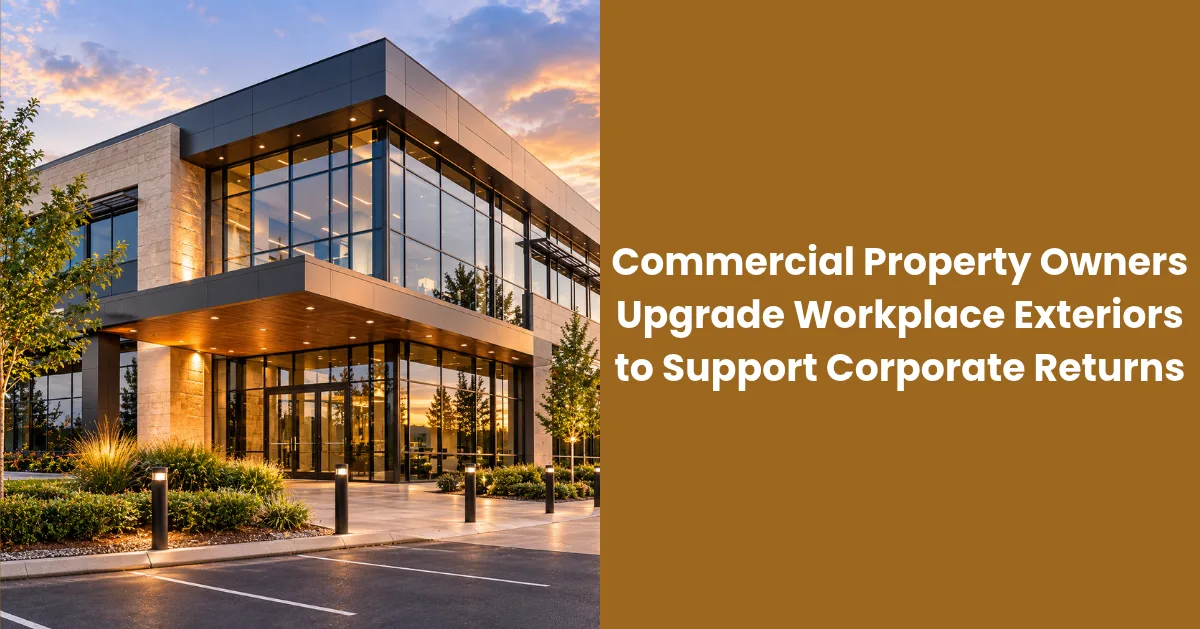
Managing commercial office parks requires acute awareness of how modern workforce habits alter leasing standards. When prospective tenants tour your corporate campus, exterior architectural conditions establish their expectations regarding building quality, professional management, and day-to-day workplace standards.
Strategic investments in exterior restorations give you direct control over leasing appeal and asset valuation. Upgrading protective surfaces and refreshing visual architecture positions your commercial portfolio for sustained financial performance. Well-maintained exteriors can also strengthen tenant confidence by showing that the property receives consistent professional care.
Why Do First Impressions Dictate Commercial Property Leasing?
Executive leadership teams evaluate prospective office spaces through the lens of client perception and employee pride. When decision-makers approach your property, peeling coatings, chalking finishes, and stained building substrates immediately signal deferred capital maintenance.
Analysis published by Weigand Real Estate indicates that well-maintained building facades establish a quality benchmark that attracts corporate tenants prepared to commit to premium rental rates. A spotless exterior communicates that your management team operates with meticulous discipline.
Your building skin serves as a billboard for every enterprise leasing space inside your corporate center. Investing in pristine facade finishes signals that your office environment matches the operational prestige your corporate occupants project to their market.
Modernizing Architectural Color Schemes
Outdated beige panels and muted earth tones from previous decades date commercial assets faster than interior floor layouts. Modern corporate tenants seek forward-looking business hubs that reflect technological innovation and forward momentum.
Applying balanced architectural contrasts - such as rich charcoal trims against neutral warm gray backgrounds - instantly modernizes aging multi-story office parks. These purposeful color palettes frame building geometry and draw positive visual focus to primary entry plazas.
Selecting premium commercial colorants with high color retention keeps exterior elevations fresh against harsh sunlight. You avoid premature fading while delivering an updated corporate identity that enterprise leadership appreciates. Consistent color choices across several buildings can also create a more unified and professional campus appearance. This visual consistency strengthens property branding while helping older structures feel more current and carefully maintained.
Defining Clean Facade Lines Across Office Parks
Clean architectural transitions give sprawling suburban office parks a cohesive, campus-wide presence. Crisp structural boundaries between precast concrete panels, metal cladding, and glass curtain walls transform disjointed properties into unified commercial destinations.
Executing targeted exterior refinements requires systematic attention to physical transition points across building perimeters:
- Align architectural joints: Maintain crisp junction points between panels to create structured sightlines.
- Restore perimeter trim: Refresh window mullions and rooflines to sharpen building profiles against natural light.
- Eliminate surface clutter: Remove decommissioned conduit and discolored fixtures that distract tenant prospects.
Carrying these geometric improvements across every parcel builds an environment of corporate permanence. Tenants view your property as an organized center that supports their internal recruiting goals.
How Do Targeted Exterior Restorations Protect Asset Value?
Commercial office parks face stiff competition when modern enterprises tour potential operational headquarters. When you schedule professional exterior painting for offices during targeted upgrades, you revitalize tired surfaces while signaling strong corporate stewardship. This targeted visual upgrade sets an immediate tone of quality that prospective corporate leadership notices before walking through your front lobby.
Capital allocation toward building envelopes produces compounding returns by shielding structural substrates from moisture penetration. Routine surface renewal stops minor hairline cracks from turning into serious spalling damage across structural precast panels.
Appraisal teams reward proactively maintained properties with higher valuations during routine portfolio reviews. Well-documented coating programs demonstrate lower deferred maintenance liabilities, which directly expands your capitalization cap-rate advantage.
Elevating Corporate Prestige Through Building Exteriors
Enterprise occupants treat their corporate workplace as a physical representation of their commercial brand. A degraded facade tarnishes client trust and diminishes staff morale the moment employees pull into the parking structure.
Commercial property research from BayScape confirms that exterior facility upgrades serve as a measurable retention strategy rather than a cosmetic line item. High-performing corporate tenants renew multi-year leases when their headquarters project uncompromising executive quality.
Elevating your building exterior generates pride of place across every floor plate. Business owners gladly invite board members and top-tier talent to an executive campus that looks immaculate from every angle.
What Makes Structural Substrate Protection Non-Negotiable?
Building substrates endure relentless exposure to driving wind, rain cycles, and temperature swings. Concrete, brick, and stucco naturally expand and contract, creating micro-fissures that allow atmospheric pollutants to penetrate outer walls.
Moisture penetration represents the single greatest threat to multi-story commercial building longevity. Left unaddressed, damp masonry corrodes internal steel reinforcement rebar, producing expensive structural failure behind attractive facade panels.
Protecting the structural substrate shields your balance sheet from catastrophic capital assessments. You preserve foundational assets while maintaining a pristine exterior that commands top-tier leasing interest. Preventive surface treatments can also slow weather-related deterioration before it reaches deeper structural layers. This approach helps extend building service life while reducing the risk of disruptive repairs in occupied commercial spaces.
Applying Elastomeric Masonry Coatings Correctly
Elastomeric coatings provide dynamic flexibility that standard exterior acrylic paints cannot deliver across commercial masonry. These advanced formulas stretch and contract across seasonal freeze-thaw cycles without tearing or losing adhesion.
Applying elastomeric systems builds a dense, monolithic membrane across porous exterior wall assemblies. This coating bridges hairline cracks up to 1/16 of an inch wide, sealing moisture out while remaining breathable to interior water vapor.
Trained commercial applicators verify proper dry-film thickness to achieve rated performance ratings. Following strict application protocols guarantees long-term envelope integrity across challenging weather regions.
Sealing Waterproof Barriers Against Moisture Intrusion
Water infiltration compromises exterior wall assemblies long before damp spots appear on interior drywall. Establishing continuous waterproof barriers around exterior wall perimeters prevents costly hidden mold remediation and structural wall repair.
Preserving complete envelope weatherproofing requires rigorous moisture mitigation across critical facade details:
- Inspect expansion seams: Fill dynamic structural joints with high-grade elastomeric sealants.
- Shield porous masonry: Block water intrusion before seasonal freeze cycles split wall panels.
- Direct surface runoff: Check flashing integration to move moisture away from wall cavities.
Systematic moisture barriers keep moisture away from structural steel framing members. You maintain strict building envelope performance while preventing emergency repair disruptions during seasonal downpours.
Defending Corporate Headquarters Against Harmful UV Degradation
Solar radiation breaks down binders in low-grade commercial coatings through intense photochemical oxidation. This degradation leads to chalking, surface embrittlement, and rapid color shifting that degrades building presentation.
Specifying high-solids exterior finishes containing advanced UV blockers shields corporate elevations from harsh solar exposure. These specialized coatings reflect destructive rays, preserving deep color saturation across south-facing and west-facing building elevations.
Investing in solar-resistant chemistry extends repaint intervals by several operational cycles. Your property retains its crisp corporate appearance while reducing recurring maintenance overhead.
How Do You Coordinate Phased Multi-Story Renovations?
Repainting an active commercial complex requires military precision to avoid disturbing enterprise tenants. Commercial landlords must balance comprehensive building renovations with tenant comfort to safeguard long-term lease commitments.
Insights from DRK Realty highlight that retaining existing tenants costs significantly less than marketing vacant commercial suites to replacement businesses. Careful operational phasing shows current tenants that you respect their daily workplace environment.
Dividing large-scale facade restorations into distinct geographical phases keeps staging footprints compact. Commercial occupants continue client meetings and administrative duties without dealing with noisy staging equipment outside their windows.
Why Does Proactive Maintenance Drive Long-Term Corporate Returns?
Reactive facility management drains capital reserves through emergency repairs, moisture damage remediation, and sudden tenant departures. Proactive exterior maintenance protects commercial building envelopes from preventable structural decay.
Commercial leasing guidance from Gulf Coast Property Group highlights proactive maintenance schedules and early renewal discussions as core drivers of consistent tenant retention. Planned facade restorations give you strong leverage when negotiating multi-year lease extensions.
Protecting physical surfaces preserves the institutional appeal that institutional buyers and corporate appraisers look for during acquisition assessments. You secure consistent cash flow, elevated property equity, and market resilience.
Managing Evening and Weekend Crew Shifts
Executing exterior prep work during standard business hours generates disruptive noise that frustrates corporate professionals. Power washing, substrate grinding, and mechanical lift movement can derail sensitive enterprise operations.
Shifting high-impact staging, abrasive surface preparation, and spray applications to second-shift hours or weekend windows resolves tenant friction. Your contractors accomplish heavy production goals while tenant parking lots remain empty.
Clear communication with facility stakeholders keeps after-hours renovation activities transparent and predictable. You secure peaceful working conditions during daytime tenant operations while maintaining rapid project timelines.
Maintaining Uninterrupted Day-to-Day Operations
Coordinating logistics around public walkways and primary building entry points protects corporate employees from workplace hazards. Overhead canopy protection and dedicated pedestrian detours guide visitors safely into main lobbies.
Professional project managers hold daily progress check-ins with your property management personnel to align upcoming tasks. Early staging adjustments prevent staging vehicles from blocking critical commercial delivery docks and executive parking rows.
Maintaining uninterrupted business activity during capital improvements demonstrates executive-grade operational oversight. Tenants appreciate your smooth execution, reinforcing their desire to remain in your corporate community.
https://www.pexels.com/photo/modern-building-exterior-and-autumn-trees-in-the-park-13865611/
Maintaining pristine commercial building exteriors reinforces corporate prestige while protecting physical assets against compounding substrate repair costs. High-performing office spaces command premium rents when their architecture reflects ongoing professional pride.
Investing in exterior restoration protects your commercial property against weather damage and changing tenant expectations. Your disciplined approach to building maintenance delivers sustainable returns, higher occupancy, and lasting portfolio value.


