


Treating envelope care as optional creates false fiscal confidence. Routine weather degrades building materials, turning minor seal failures into disruptive structural headaches.
https://www.pexels.com/photo/renovation-lift-in-front-of-house-11953905/
Why Do Small Exterior Flaws Threaten Commercial Operations?
Commercial building envelopes endure relentless punishment from thermal cycling, seasonal winds, and heavy precipitation. You might view tiny exterior flaws as purely cosmetic annoyances that pose minimal risk to daily workflow. That assumption exposes your firm to sudden capital expenditures and severe operational interruptions.
Exterior assemblies function as an interconnected shield. When caulking shrinks or flashing pulls loose, outdoor elements gain direct access to vulnerable interior substrates.
Your team members focus on productivity, unaware that exterior masonry joints slowly crumble above them. Deferred facade work places heavy strain on building components, forcing your climate systems to run harder while decay accelerates. Spotting these small defects early keeps your corporate environment secure and predictable.
How Do You Spot Subtle Envelope Deterioration Early?
Walking your facility grounds regularly reveals early indicators of building fatigue. You do not need complex equipment to notice initial distress signals along outer elevations. A visual walkthrough helps your maintenance crew identify exterior stress before expensive damage spreads across multiple floors.
You can uncover common warning signs by inspecting high-risk exterior zones:
- Inspect window perimeter caulking: Look for brittle or missing sealant around metal window trim.
- Track masonry expansion joints: Note hairline fractures running along vertical brick mortar seams.
- Examine exterior base walls: Check for mineral discoloration and peeling paint near grade level.
- Monitor roofline drainage channels: Identify standing pond water near parapet edges and scuppers.
What Do Hairline Cracks Signal About Facade Integrity?
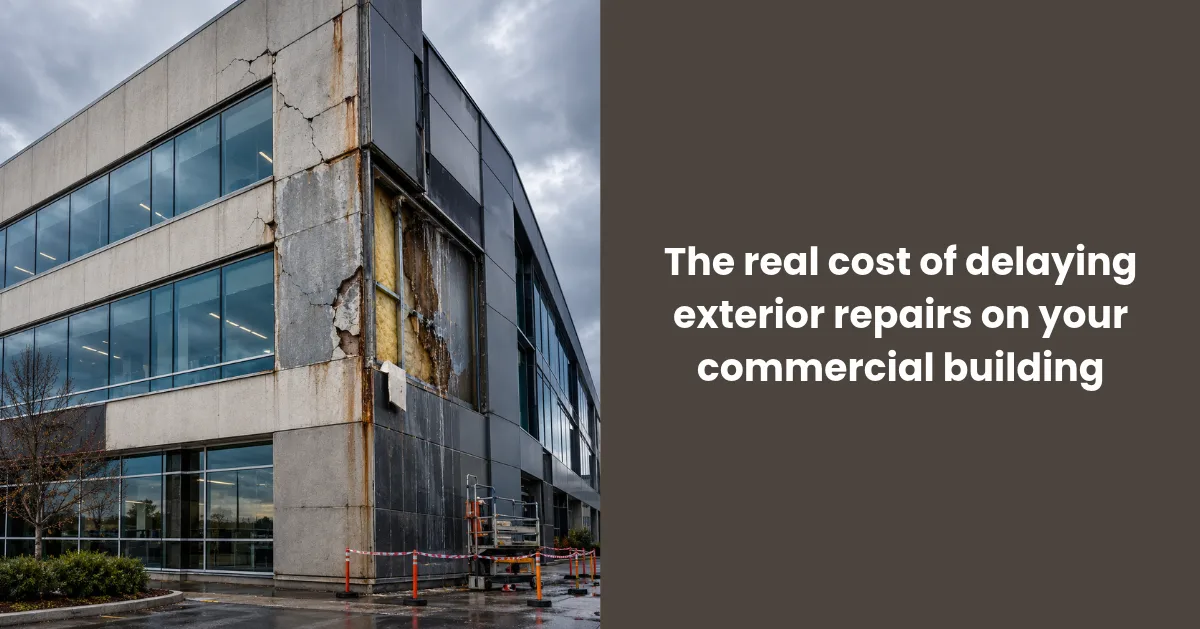
Hairline masonry fractures look deceptively harmless on broad brick or precast concrete facades. You might classify these faint cracks as normal building settling that demands little spending. Water penetrates these microscopic crevices, freezing during cold spells and forcing structural materials apart through hydraulic expansion.
Building envelopes experience steady stress from shifting ground conditions and wind pressures. Exterior panels warp when water weakens hidden anchor bolts, creating dangerous conditions above busy pedestrian walkways. Fixing cracked cladding early prevents complete panel detachment and avoids catastrophic liability claims.
According to projections by Market Research Future, the facade maintenance and repair services industry will expand from $8.99 billion in 2025 to $12.5 billion by 2035. Rising market demand reflects how commercial operators prioritize exterior skin health to protect long-term property investments. Ignoring small facade splits risks major structural remediation that drains enterprise capital.
How Does Roof Wear Create Immediate Operational Vulnerability?
Flat and low-slope commercial roofs serve as your primary line of defense against severe weather. Pooling rainwater and ultraviolet radiation break down protective membranes, creating weak spots around mechanical curb flashings and drains.
Water pooling above production floors creates sudden vulnerabilities for your team. When you notice ceiling dampness or membrane blisters, scheduling commercial roof leak repair prevents moisture from rotting structural roof decking. Delaying that service allows trapped moisture to saturate internal insulation boards and corrode steel roof panels.
Saturated roof insulation loses its thermal resistance, forcing commercial HVAC units to run continuously. Your company pays higher energy bills every month while water travels laterally across ceiling assemblies. Fixing small punctures protects your overhead deck and your corporate operating budget.
Why Does Water Penetration Spread Faster Than Expected?
Water possesses an uncanny ability to travel far from its initial exterior entry point. A tear in an exterior sealant bead allows wind-driven rain to slip behind perimeter walls and run along horizontal steel beams. By the time water emerges on an interior ceiling, the source might sit 40 feet away on an outer parapet wall.
This internal migration disguises the true extent of structural deterioration inside your walls. Moisture pools around structural fasteners, degrading drywall and rotting hidden acoustic panels while your staff operates unaware.
Tracking moisture travel demands thorough diagnostic tools like thermal imaging cameras and moisture meters. Your operations team must trace water pathways back to original exterior fissures rather than simply patching interior drywall stains.
How Does Hidden Moisture Cripple Critical Technology Infrastructure?
Modern commercial facilities rely on delicate server rooms, network switches, and automated production machinery. When exterior envelopes fail, migrating water gravitates toward ceiling cable trays and electrical conduit runs. A single ceiling breach above your core data center triggers short circuits and immediate digital downtime.
Moisture and humidity corrode delicate circuit boards, ruining expensive server hardware and destroying corporate data. Your IT department faces emergency recovery protocols while customer-facing portals and internal enterprise systems go offline.
Protecting your technical core requires maintaining watertight exterior boundaries around all equipment zones. Sealing rooftop conduit penetrations and parapet caps shields sensitive network gear from unexpected moisture ingress.
What Are Secondary Costs Associated with Internal Leaks?
Direct structural repairs represent only a fraction of the total bill generated by unaddressed exterior leaks. When water enters workplace spaces, indoor humidity climbs and creates fertile ground for mold spores behind vinyl wall coverings. You risk occupational health complaints and regulatory scrutiny when airborne contaminants spread through central air handlers.
Indoor air quality investigations disrupt normal office routines and rattle employee confidence across departments. Relocating teams to temporary workspaces during remediation adds hefty leasing costs and hampers collaboration.
Inventory stored in warehouses faces equal peril from unmanaged moisture infiltration. Damp conditions warp cardboard packaging, rust stored components, and ruin finished merchandise awaiting shipment.
Calculate the Real Price of Postponed Upkeep
Deferring minor exterior repairs might seem like a practical way to protect cash reserves. Postponed maintenance accumulates like unpaid high-interest credit card debt, compounding financial liabilities with each passing season. Minor facade caulk failures grow into deep masonry spalling that requires costly scaffolding and structural shoring.
Data published by the Facility Management Journal indicates that facility upkeep costs rise steadily, with projected annual increases averaging 5% across five years. Allowing building wear to linger means your business will pay substantially more for identical repair work in future operating quarters. Postponed upkeep guarantees inflated bills once structural distress forces your hand.
Emergency repairs carry heavy contractor premiums, expedited material freight fees, and after-hours labor surcharges. You lose negotiating power when contractors must stabilize dangerous exterior conditions under severe time constraints. Planning envelope maintenance ahead of time keeps repair costs competitive and predictable.
How Do Modern Facility Teams Track Building Health?
Forward-thinking facility managers no longer rely on guesswork to evaluate building envelope performance. Integrating computerized maintenance management platforms allows your team to schedule routine inspections, record exterior wear, and track repair lifecycles across commercial assets. Digital tracking verifies that minor siding splits and flashing gaps receive attention before failures multiply.
Data from Brightly Software featured on Buildings.com reveals that 91% of organizations employ asset management software for preventive maintenance, with 88% confirming it lowers expenses and 87% reporting it prevents unscheduled operational downtime. Modern facility managers leverage these platforms to substantiate maintenance budgets and prevent operational chaos.
Tracking maintenance data builds a valuable historical ledger for your commercial property. You gain clear insight into how building materials perform against local weather extremes. This intelligence guides smarter replacement decisions and keeps maintenance spending aligned with operational requirements.
Build a Predictable Budget for Exterior Preservation
Establishing a realistic maintenance reserve protects your balance sheet from sudden capital shocks. Many businesses underfund exterior preservation, treating building maintenance as an afterthought until major structural leaks occur. Allocating consistent annual capital toward envelope health preserves your commercial asset and maintains steady operational cash flow.
According to maintenance guidance on Buildings.com, building owners should allocate 2% to 5% of their property's total value each year toward ongoing upkeep. Structuring your annual facility budget around this benchmark provides adequate reserves to tackle critical exterior tasks:
- Fund routine sealant renewal: Replace deteriorating silicone and polyurethane joint caulking every 5 years.
- Reserve capital for masonry: Repoint damaged mortar beds and apply breathable water repellents.
- Budget for roof tune-ups: Repair minor membrane blisters, re-secure loose edge metal, and clear drains.
- Schedule professional visual reviews: Hire qualified building enclosure consultants for comprehensive evaluations.
Protect Asset Valuation with Timely Enclosure Interventions
Commercial property value depends on exterior physical condition and structural integrity. Prospective tenants, buyers, and commercial appraisers scrutinize exterior building envelopes during initial due diligence inspections. Peeling paint, spalling concrete, and cracked sealant signal broader neglected maintenance throughout the facility.
Visible exterior neglect diminishes your leasing leverage, forcing you to offer rent concessions or tenant improvement allowances to secure quality occupants. Institutional lenders demand larger repair escrows or offer less favorable refinancing terms when exterior deferred maintenance reports reveal substantial backlogs.
Maintaining an attractive exterior reinforces your corporate brand and community reputation. Clients and business partners form immediate impressions based on the cleanliness and structural condition of your corporate headquarters. Investing in timely facade and roof upkeep projects stability, professionalism, and organizational success.
https://www.pexels.com/photo/roofing-works-at-detached-family-house-12243107/
Swift structural intervention protects your business continuity and defends your bottom line against unexpected financial losses. Addressing minor exterior wear the moment it appears prevents compounding moisture damage, expensive technology downtime, and disruptive emergency repairs.
Take control of your facility's physical envelope today by implementing routine visual assessments and proactive maintenance reserves. Protecting your commercial building preserves asset valuation, safeguards daily operations, and keeps your enterprise running strong.