



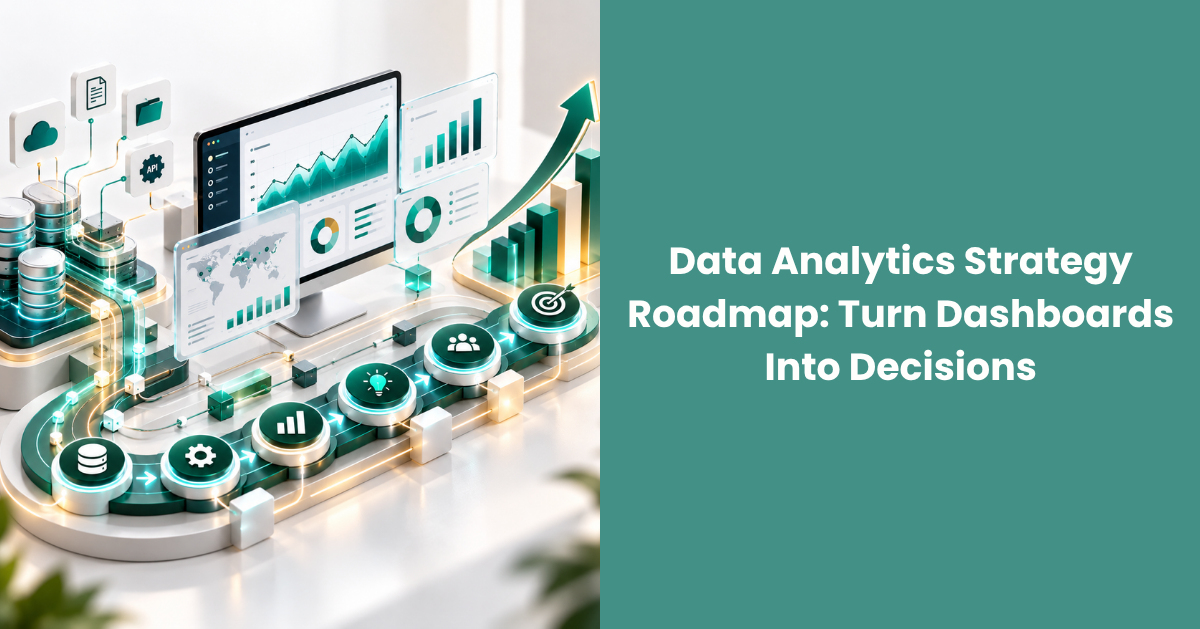
It's a Data Analytics Strategy, and all that really means is a plan connecting the data you already have to the decisions the business actually needs to make. Without one, analytics spending turns into an expensive pile of reports nobody acts on. What follows is a practical roadmap for building one your team can actually execute, not another framework that dies in a slide deck.
Why a Data Analytics Strategy Fails Without Leadership Support
The same thing happens in most analytics programs that go nowhere. Teams build the capability before anyone agrees on what it's for. Engineering stands up the infrastructure, someone buys a BI tool, and six months later the company can see everything and understand nothing. Reports pile up. Decisions don't get any faster.
Skipping this step rarely causes a dramatic blowup. It just wastes money slowly. Budget gets approved, dashboards get built, and a year later nobody can name a single decision that changed because of them. Then the board starts asking why the data team costs so much, and the honest answer is that they were judged on how many reports they shipped, not on how many decisions got better.
A Data Analytics Strategy flips this around. Instead of collecting everything and hoping something useful turns up, it starts with the decisions the business needs to make and works backward to the data required to support them. Decisions first, data second. That one change is what separates a real roadmap from a wish list, and it's the habit companies like Bacancy Technology build into a project before a single pipeline gets built.
The 5-Stage Data Strategy Roadmap for Technical Leaders
A roadmap a CTO can execute has to be concrete enough to put names and dates against it. It works best when you start from the decisions you care about and trace back to the data behind them, rather than starting with whatever data you happen to have and hoping it leads somewhere useful. These five stages give you that structure without forcing a rigid, step-locked process on the team.
1. Assess your data maturity honestly
Map what you actually have: source systems, data quality, governance gaps, and where analytics currently breaks down. Almost every team rates its own setup higher than it deserves. Catalog your data sources, write down the quality issues, and note where teams already don't trust the numbers. It's dull work, but it keeps you from building on top of data you can't rely on.
2. Prioritize the decisions, not the data
Get senior leadership in a room before you scope a single pipeline. Put a single question to each team. If one decision could be made sharper with better data, which one would they choose? The answers, usually three to five decisions, become your scope. Finance might want real product-line profit after logistics. Operations might want to know which shipments will miss their deadline. Sales might want an early warning on accounts about to leave. For the first year, if a piece of work doesn't move one of those decisions, it doesn't get built. Trying to measure everything is the fastest way to inform nothing.
3. Set governance and ownership early
Governance isn't paperwork you add at the end. It's the reason people trust the numbers. Decide three things up front: who owns each dataset, who's allowed to change a metric's definition, and how data quality gets checked. Teams that settle this early argue about the numbers far less than teams that don't. Do it before you scale your tools, not after people are already fighting over what a number means.
4. Build the execution plan
Now sequence the work: people, tools, and timeline, all mapped back to the decisions from Stage 2. Don't pick the tools first. The stack should follow the decisions, not the other way around, because a warehouse or BI platform you choose before you know the questions almost always gets rebuilt later. Be honest about where the team is short on skills, too. That's usually where a CTO brings in a partner. Firms like Bacancy Technology offer data analytics consulting services that design the architecture and governance model with you up front, which tends to be faster than a year of figuring it out internally.
5. Measure and re-align every quarter
A Data Analytics Strategy is something you keep updating, not a document you finish once. Check progress against real outcomes every quarter, not once a year. Drop the initiatives that aren't making any decision better. The teams that get this right use the roadmap to keep finance, operations, and product on the same page about what's coming and why.
Where Data Roadmaps Break Down: The AI-Readiness Gap
Here's the stage most roadmaps skip. Analytics and AI now run on the same underlying data, and the gap between them is where a lot of 2026 programs get stuck. A roadmap that stops at clean dashboards is already behind, because the next thing leadership asks for will almost certainly involve AI, and whether you can say yes depends entirely on how well you did in the earlier stages.
Get the data foundation right before adding AI
AI needs unified, well-governed data far more than a traditional BI report ever did. Run AI over data that's scattered and full of gaps, and the only thing you speed up is how fast you reach the wrong answer. The groundwork here, connecting your sources, cleaning the data, and tracking where it came from, is boring, which is exactly why teams skip it. It's also why dedicated data and analytics services exist to get it right before the AI layer goes on. A good Data Analytics Strategy puts this groundwork first.
Close the analytics skills gap deliberately
A roadmap is only as good as the people building it. When one decision area needs a dedicated owner and your team is spread thin, the fastest option is usually to bring in outside help rather than wait for an already-busy team to get to it. This is where a partner like Bacancy Technology fits, giving the roadmap the specialist skills it needs to actually get built instead of sitting on a whiteboard.
The goal was never to slap AI onto every process you run. It's to add AI only once the data underneath it is solid, so the roadmap doesn't fall apart the first time leadership asks for something smarter than a chart.
Turn the Roadmap Into Measurable Business Outcomes
Go back to that company with more dashboards than readers. The company was never short on data or tools. It was the missing plan tying both to decisions. A Data Analytics Strategy that a CTO can actually execute is concrete, owned, and reviewed on a regular schedule, not a document that sits in a drawer gathering dust. Start with the decisions that matter, assess honestly, sort out governance early, sequence the work, and revisit it every quarter. And when one area needs a dedicated owner sooner than you can build the team, it's worth keeping the option open to hire a data analyst who can take it on end to end. Do that, and the next time the board asks a hard question, the answer takes a meeting, not a month.
