



Yet letting rodents establish a foothold in your barn creates consequences far beyond chewed sacks.
Rats and mice carry serious equine pathogens, including Leptospira (the primary bacterial cause of moon blindness) and Salmonella. Rodents also chew through electrical insulation, sparking barn fires, while destroying expensive leather saddles and winter blankets.
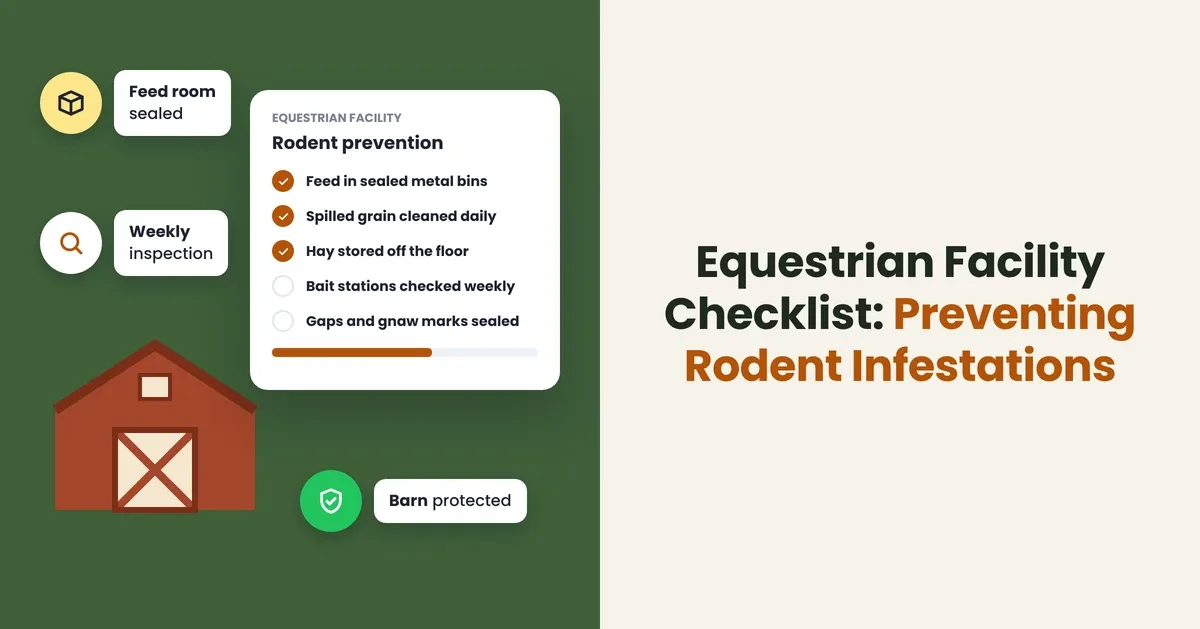
Effective rodent management requires moving beyond scattered snap traps or relying on barn cats. Successful facility managers treat pest prevention as an everyday operational protocol. Use this checklist to inspect, fortify, and protect your barn before rodents move in.
1. Feed Room Fortification: Securing Grain and Rations
The quick answer: Eliminating accessible grain requires storing bulk rations in heavy-gauge metal containers, enforcing a zero-spill sweeping rule after every feeding, and washing supplement buckets daily.
The feed room is ground zero for rodent activity. A single rat eats an ounce of grain nightly, but spoils ten times that amount through droppings and urine.
Run through your feed room protocol:
- Store Grain in Metal: Replace plastic tubs with heavy-gauge galvanized steel cans or metal chests. Rodents easily chew through plastic and rubber bins in hours.
- Sweep After Every Meal: Sweep around the scale, carts, and counters immediately after feeding. Leaving stray pellets provides rodents with an easy food source.
- Seal Sweeteners: Transfer opened bags of pelleted supplements and sweet feeds into gasket-sealed containers to trap aromatic scents.
- Rinse Dispensers Daily: Wash dosing syringes, molasses pumps, and oil jugs daily to remove sweet residues from countertops.
2. Hay Loft and Bedding Storage Sanitation
The quick answer: Proper hay storage means elevating bales on pallets, keeping perimeter gaps for airflow, and using first-in, first-out rotation to prevent undisturbed nesting havens.
A towering stack of square bales against a dark barn wall creates an ideal rodent haven, providing warmth, security, and seeds.
Incorporate disciplined hay loft pest exclusion habits:
- Elevate Bales on Pallets: Never stack hay directly on dirt or concrete. Raise bales at least six inches on pallets to promote airflow and prevent ground-level tunnels.
- Maintain the Eight-Inch Rule: Leave an eight-inch gap between hay stacks and walls. Rodents dislike crossing open floor space; pulling hay away from walls removes protected travel runways.
- Rotate Inventory (FIFO): Practice First-In, First-Out rotation. Clean out chaff before stacking new cuttings to avoid leaving bottom layers undisturbed for months.
- Store Bedding Off the Floor: Keep wood shavings or bagged bedding sealed and elevated on platforms rather than in loose floor piles.
3. Tack Room Protection and Structural Wiring Defense
The quick answer: Shielding high-value gear requires sealing tack room perimeters with weatherstripping, enclosing electrical wiring inside rigid metal conduit, and storing winter blankets in airtight trunks.
Rodents have continuously growing incisors that compel them to gnaw. In a barn, this leads to ruined leather bridles, gnawed saddle flocking, and shredded turnout sheets used for nesting.
Worse, chewed wiring is a leading cause of barn fire electrical hazards. Protect your infrastructure:
- Encase Wiring in Metal Conduit: Never permit exposed wiring in barns or run-in sheds. Encase all electrical lines, switch boxes, and outlets in rigid EMT metal conduit.
- Harden Tack Room Doors: Install aluminum-backed door sweeps along tack room doors to ensure gaps do not exceed a quarter-inch.
- Store Blankets in Sealed Trunks: Never leave horse blankets on open shelving during the off-season. Pack them inside sealed trunks or hang them on metal bars treated with cedar oil.
4. Stall Maintenance and Barn Aisle Hygiene
The quick answer: Keeping stalls rodent-free involves prompt manure removal, cleaning beneath stall mats, securing feed tubs, and eliminating overnight ration leftovers.
Stalls provide rodents with easy access to dropped grain and fresh water from automatic drinking bowls.
Audit your daily stall habits:
- Control Feed Wastage: If a horse tosses grain into bedding, install feed tubs with spill-lip rims or place buckets over rubber ground pans to catch loose grain.
- Pull Tubs Nightly: Never leave uneaten sweet feed or soaked mash in stalls overnight. Remove and rinse feed tubs once horses finish eating.
- Inspect Beneath Stall Mats: Check edges of rubber stall mats during seasonal cleanings. Rodents frequently tunnel beneath mats in soft dirt floors.
- Keep Aisles Clean: Keep center aisles clear of hay chaff and bedding, removing ground cover rodents use when crossing between stalls.
5. Water Source and Outdoor Perimeter Management
The quick answer: Eliminating outdoor rodent harborage involves repairing dripping water lines, managing manure piles away from buildings, and cutting back weeds along barn foundations.
Rats need an ounce of water daily to survive. Leaking hydrants, overflowing troughs, and stagnant puddles provide hydration that sustains expanding colonies.
Secure your external perimeter:
- Fix Leaking Hydrants: Repair dripping valves and float valves to eliminate standing water near barn foundations.
- Clear Foundation Perimeters: Maintain a bare 24-inch gravel or mowed strip around the barn foundation. Clear tall weeds and stored equipment that provide daytime cover.
- Relocate Manure Storage: Position manure bunkers and compost piles at least 100 feet from the barn. Decomposing manure generates warmth in winter, attracting pests if placed near stalls.
- Secure Trash Cans: Place barn garbage cans on concrete pads with latching lids, and empty them regularly.
6. Biosecurity and Targeted Professional Management
The quick answer: A safe, sustainable rodent control strategy uses tamper-resistant mechanical bait stations and targeted exterior monitoring while avoiding loose poisons that risk pet and horse health.
Managing pests around livestock requires caution. Scattering loose rodenticide around horse stalls is dangerous; horses, dogs, and barn cats can ingest bait directly or suffer secondary poisoning from eating poisoned rodents.
Barns in rapidly expanding rural-suburban corridors face seasonal rodent migrations as development disrupts field habitats. For equestrian centers, boarding stables, and private horse farms dealing with stubborn rat populations, partnering with specialists in rodent control in Frisco, TX ensures heavy-duty, tamper-resistant exterior bait stations are deployed safely.
Working with licensed pest professionals allows facilities to maintain strict equestrian biosecurity protocols, monitoring activity cycles and eliminating breeding colonies before they penetrate equine spaces.
Preventing rodent infestations in an equestrian facility is an ongoing operational discipline, not a one-time project. By eliminating accessible food sources, elevating hay supplies, enclosing wiring in metal conduit, and hardening barn perimeters, facility managers remove the conditions pests need to thrive. Implementing a structured checklist protects valuable feed and equipment while safeguarding your horses from disease, keeping your barn clean, safe, and secure.


