



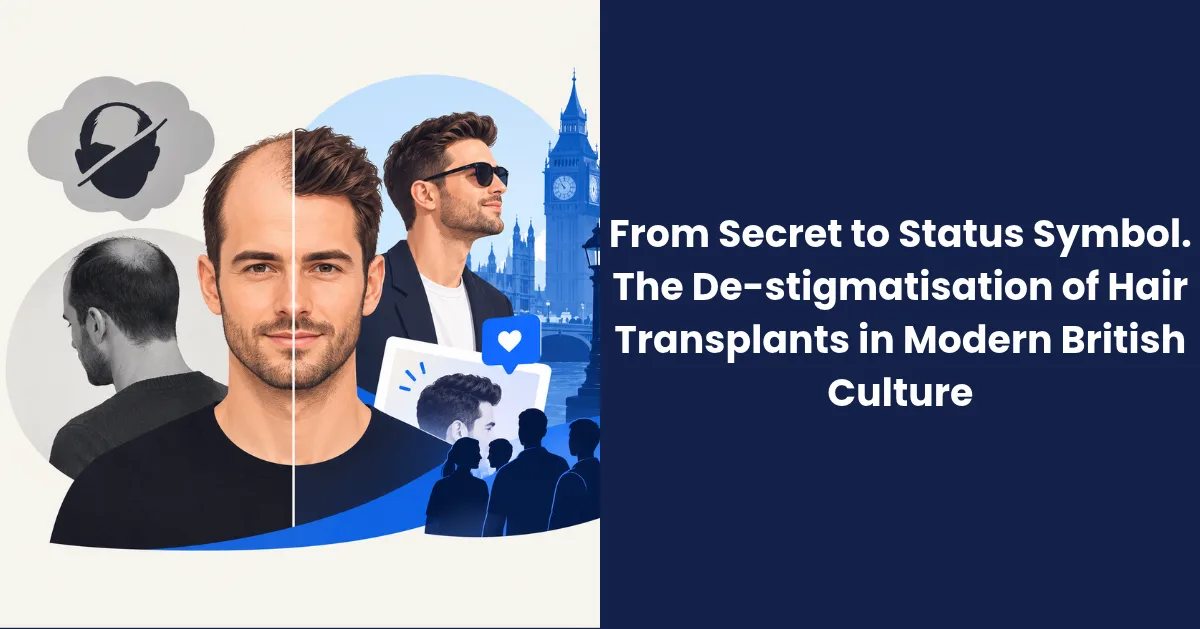
The reaction was mixed. There were plenty of jokes. But something shifted, and more than a decade later the confession that once made headlines barely gets a second look. Footballers, reality TV stars, actors and the bloke three desks over now talk about their grafts much as they'd talk about getting their teeth straightened.
It's easy to overstate this change, though. Hair loss still hurts people's confidence, and plenty of men in Leeds and elsewhere still book consultations quietly and tell nobody. So the real question isn't whether the stigma has gone. It's what has replaced it, and what that means for the people considering surgery and the clinics offering it.
Why the Taboo is Breaking
The dismantling of the hair transplant stigma is tied to the broader normalisation of cosmetic procedures in British society. For years, Parliament and public health bodies have noted the rise in aesthetic interventions among the general public, moving them well beyond the domain of the wealthy or famous. Several key factors have driven this democratisation.
First, the ubiquity of social media and digital imagery has intensified the focus on personal appearance for all genders. In a hyper-connected world, the "before and after" narrative has become a staple of online life. When public figures, athletes, and influencers openly discuss their procedures, they effectively give others social permission to do the same. This public ownership of personal aesthetics has stripped away much of the old shame.
Furthermore, the modern definition of masculinity has expanded. Men face less pressure to "tough out" insecurities silently. Instead, people increasingly recognise that personal grooming and aesthetic improvements are legitimate expressions of self-esteem and professional confidence. A hair transplant is no longer viewed as an attempt to hide a failing; it is increasingly seen as a proactive investment in one's personal and professional brand.
Confidence, Identity and Expectations
Hair loss is often treated as a joke, but for many men it's anything but. Research has linked hair loss with lower self-esteem, social anxiety and a sense of looking older than they feel. Men describe avoiding photos, dreading windy days and feeling less confident at work or when dating. These aren't trivial worries, and the growing openness around hair transplants has given many men permission to take them seriously.
That openness has a flip side, though. When procedures are everywhere on social media, losing your hair can start to feel like a problem you're expected to fix, not a natural part of ageing. Younger men in particular may feel pressure to act early, sometimes before their pattern of hair loss is clear enough for a surgeon to plan properly.
That's why expectations matter as much as technique. A transplant can restore coverage and confidence, but it can't recreate an eighteen-year-old's hairline, and it won't stop further loss on its own. Responsible clinics spend time on these conversations during consultation.
Some go further. Good practitioners watch for signs of body dysmorphic disorder, a condition in which someone becomes fixated on perceived flaws that others barely notice. For these patients, surgery rarely brings the relief they hope for. Turning someone away, or referring them for support first, isn't bad business. It's a mark of a clinic that puts patient wellbeing ahead of a booking.
The Turkey Question: Why Openness Is Bringing Patients Closer to Home
When hair transplants were something men kept secret, Turkey had an obvious appeal beyond price. You could fly out, have the procedure done far from anyone you knew and come back once the redness had faded. Distance offered discretion. For a generation of British men, Istanbul was as much about privacy as it was about cost.
As the stigma fades, that reason matters less. If you're happy to tell your mates, your colleagues and your followers about your transplant, you don't need to hide 1,500 miles away. That's changing what patients value. Convenience, aftercare and being able to pop back to your surgeon are starting to count for as much as the headline price.
Word of mouth is speeding this up. Men who once would never have admitted to a procedure now recommend their clinic to friends, share progress photos on Instagram and post month-by-month updates on TikTok. A personal referral from someone you know, whose results you've seen in real life, carries far more weight than an all-inclusive package advert. When those recommendations point to a clinic in Leeds or elsewhere in Yorkshire, choosing local becomes the natural choice.
That doesn't mean going abroad is always a mistake. Many patients travel, get good care and come home happy. The risks lie in the gaps. At some high-volume clinics, technicians rather than qualified surgeons carry out much of the surgery, and patients may meet the doctor only briefly. Once home, follow-up care can be difficult to access. UK surgeons have spoken publicly about repairing infections, poor graft placement and overharvested donor areas.
The real issue isn't the country. It's continuity of care. A cheap procedure can become expensive if it needs to be fixed later.
The Role of Information and Patient Empowerment
While cultural shifts have opened the door, access to high-quality information has ensured the movement's momentum. Modern British patients are significantly more informed than their predecessors. They no longer rely solely on a local consultant’s pitch; they do deep research, scrutinise clinic portfolios, compare techniques like FUE (Follicular Unit Extraction), and read patient testimonials on independent forums.
This knowledge surge has forced the industry to adapt. Clinics that once relied on opaque practices are finding that trust is now the primary currency. For clinics, this means hair transplant marketing must shift away from aggressive, transactional language and toward educational, transparent, patient-centric content.
Whether a clinic operates in London or as a boutique specialist in Leeds, demand is for authenticity. This is why many practices now engage a specialised medical marketing agency in Leeds to ensure their digital presence reflects ethical standards, clinical expertise, and genuine patient outcomes rather than hollow promises.
When patients openly share their transplant journeys on Instagram and TikTok, marketing has to keep pace. A medical marketing agency in Leeds can help clinics speak to more open, better-informed audiences with ethical, evidence-led messaging.
The Future of Restoration in the UK
So where does it go from here? Technology will keep moving things forward. AI tools that map hair loss patterns and more advanced robotic assistance should make results even more precise over the next few years. But the bigger story of the 2020s isn't about the kit. It's that hair loss has gone from something men laughed off in public and worried about in private to something they're happy to tackle head-on.
For most people in the UK, a hair transplant is now just another sensible personal choice, like laser eye surgery or sorting out a skin problem. Wanting to look and feel like yourself again isn't vanity. It's normal.
For clinics, that's a big opportunity and a big responsibility. Today's patients are well-informed, they ask the right questions and they can spot a hard sell a mile off. The clinics that do well will be the ones that stay honest, deliver great results and talk to people like adults. The secret's out. What matters now is how the industry handles the spotlight.


