



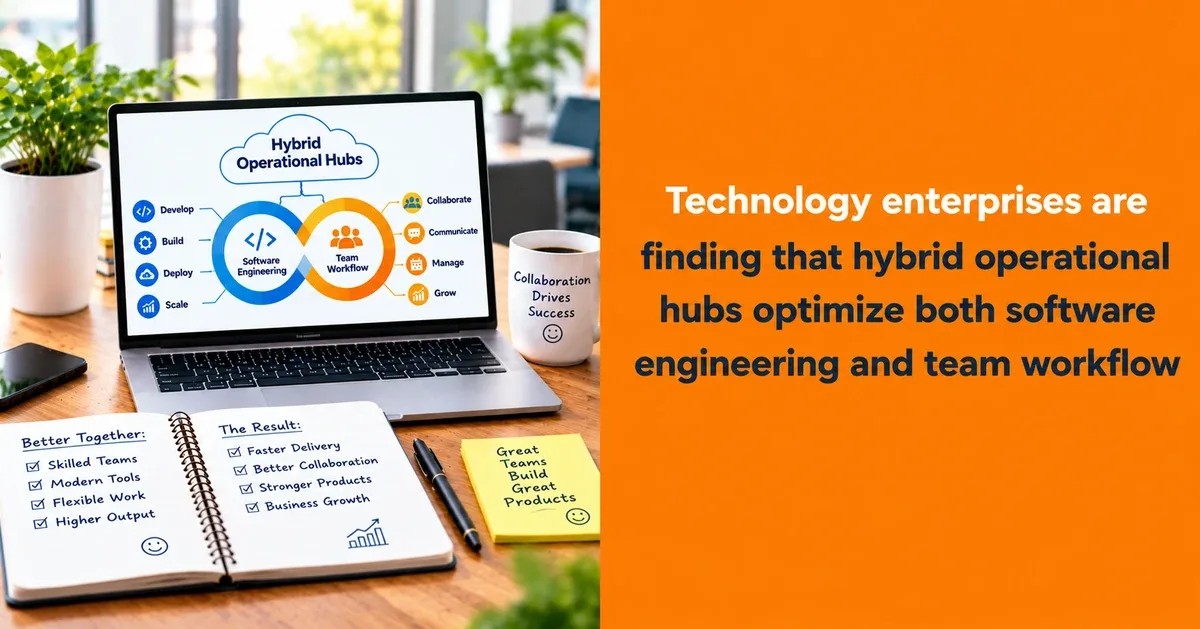
Rapid business expansion puts unique pressure on your engineering squads and operational teams. When your engineers balance complex codebases with tight product delivery windows, purely remote setups can leave critical communication fragmented.
High-performing technology businesses now establish agile physical workspaces that complement offsite flexibility. Building dedicated hybrid operational hubs gives your team the ideal balance between uninterrupted individual focus and dynamic face-to-face problem-solving.
How Do Physical Spaces Reshape Modern Engineering Workflows?
Software creation demands distinct cognitive states throughout the development sprint. Your developers need hours of quiet, solitary concentration to architect algorithms, write clean unit tests, and resolve intricate logic bugs. They need high-bandwidth communication when mapping system architecture, designing database schemas, or debugging distributed services across multiple microservices. Purely virtual channels often drag these collaborative moments into endless message threads and delayed video check-ins.
Physical operational hubs eliminate this friction by turning spontaneous communication into rapid solutions. Findings published in PubMed Central show that more than 57% of companies structure their workweeks around mixed remote and in-person routines. When you bring your engineers together for targeted in-person work sessions, they untangle blockers in minutes instead of waiting hours for asynchronous replies.
Shared physical environments accelerate product momentum by keeping cross-functional teammates tightly connected. Product managers, quality assurance testers, and frontend engineers sit side by side to evaluate live staging builds in real time. This immediate feedback loop cuts down sprint revisions and keeps your software shipping cycles on schedule.
Structuring Your Floor Layout for Peak Concentration
A productive technology hub separates noisy group interactions from intense mental focus areas. You protect your team from constant disruption by defining clear spatial zones tailored to specific engineering tasks.
Dedicated Focus Pods
Quiet alcoves equipped with dual-monitor mounts, mechanical keyboards, and acoustic baffles give developers a sanctuary for hard algorithmic problems. Your engineers enter these distraction-free spaces when they must complete deep architectural work without conversational interruptions.
Interactive Architecture Rooms
Spacious breakout areas lined with edge-to-edge whiteboards allow system architects to sketch data pipelines and user flows freely. Gathering your technical leads in these project rooms creates an active environment where complex technical decisions reach consensus quickly.
Why Are Technology Companies Scaling Through Regional Centers?
Expanding outside crowded capital markets gives your business direct access to experienced technical talent without forcing you into bidding wars for overpriced commercial leases. Emerging technology clusters house seasoned software engineers, cybersecurity specialists, and infrastructure professionals who value high-impact roles at innovative companies. Establishing a regional presence lets you recruit these capable professionals while keeping your operational expenditure lean.
Building a localized base strengthens your brand reputation with regional clients and prospective engineering candidates. When you plan your team expansion into emerging commercial corridors, securing an adaptable office space rental in Birmingham or elsewhere lets your business establish an immediate physical presence without heavy upfront capital investments. Your leadership team retains total financial flexibility while your engineering squads gain a dedicated home base for local collaboration and client presentations.
How Does Flexible Working Improve Employee Retention?
Retention rates climb when you give local developers a balanced working rhythm that respects their personal time. A study cataloged in PubMed demonstrated that allowing teams to work from home two days per week protects productivity and lowers employee turnover by one-third. By establishing a central regional workspace, you offer your staff a professional alternative to kitchen tables and noisy coffee shops without locking them into daily commutes.
Flexible working arrangements also help technology companies attract skilled professionals who value independence and a healthy work-life balance. Giving employees the freedom to choose where they complete focused tasks can improve job satisfaction while keeping office time reserved for teamwork and creative problem-solving. This approach helps regional teams build strong working relationships without sacrificing the flexibility that modern professionals expect.
How Do You Bypass Commercial Lease Commitments When Growing?
Traditional commercial real estate contracts present severe risks for high-growth tech enterprises. Committing to a rigid multi-year lease forces you to forecast your headcounts 3 to 5 years ahead, which contradicts the rapid pivots common in software engineering. If your firm outgrows the space in 12 months, you face punitive sublease arrangements; if your remote ratio increases, you pay for empty desks.
Flexible operational workspaces replace rigid multi-year agreements with flexible monthly or annual memberships. This agility keeps your balance sheet light, allowing you to reallocate capital toward hiring senior developers, funding research, or scaling marketing initiatives.
Agile Workspace Advantages for Fast-Moving Startups
Agile workspace memberships give your enterprise the operational flexibility to adapt physical footprints alongside your product roadmaps. Tech organizations gain immediate operational advantages when stepping away from conventional commercial leasing models:
- Capital conservation: Directing financial resources toward software development and talent acquisition preserves your operational runway compared to paying heavy lease security deposits.
- Rapid headcount scalability: Adding desks or dedicated team suites takes mere hours as your engineering squads expand to handle new enterprise contracts.
- Turnkey workplace operations: Offloading utilities, cleaning schedules, security monitoring, and front-desk reception allows your operations team to focus on core product milestones.
- Risk reduction: Shortening contract commitments protects your cash reserves against sudden market shifts or strategic operational realignments.
These flexible terms give your growing company the freedom to test new geographical markets without gambling corporate capital on speculative long-term investments.
What Infrastructure Requirements Support Modern Engineering Teams?
A tech hub is only as effective as the technical foundation supporting it. Modern engineering workflows depend heavily on high-speed internet pipes, cloud sync mechanisms, and complex continuous integration systems. A single network outage during a major release deployment can disrupt thousands of active users and damage client trust.
Selecting a workspace with enterprise-grade network architecture prevents these operational bottlenecks before they occur. Your engineers require dedicated bandwidth pipelines that handle massive repository downloads, container image builds, and simultaneous video calls without speed degradation.
Protecting Intellectual Property and Network Stability
Security standards for technology firms require strict physical and digital controls to safeguard proprietary software code and client databases.
Dedicated Virtual Networks
Configuring isolated VLANs for your engineering department protects internal communications from guest traffic and outside devices. Your system administrators maintain granular firewall rules, VPN gateways, and device access controls across all local team machines.
Redundant Power and Connectivity
Secondary internet service providers and backup power systems keep your development servers and testing hardware running during municipal grid failures. Continuous uptime guarantees that sprint deadlines and client deliverables never slip because of local infrastructure outages.
How Do Purpose-Built Workspaces Elevate Team Collaboration?
High-performing software teams do not work in isolation. Seamless coordination between product designers, engineering managers, and backend architects requires spaces crafted expressly for dynamic cross-functional interaction. When teams gather in rooms designed for creative technical thinking, they break through complex design bottlenecks that stall remote projects.
Modern hubs incorporate acoustic engineering and flexible furniture systems to create responsive work environments. Teams move modular desks together for hackathons or spread out across casual lounge spaces for sprint retrospectives and backlog grooming sessions.
Key Elements of an Effective Tech Hub
Building an inspiring environment requires balancing functional technical utilities with thoughtful human comforts. High-performing engineering spaces incorporate distinct physical features that keep technical talent energized:
- Ergonomic workstation setups: Adjustable standing desks, supportive task chairs, and monitor arms prevent physical strain during marathon coding sessions.
- Acoustic privacy booths: Soundproof telephone pods allow developers to take private one-on-one calls or pair-program remotely without disturbing the wider room.
- Smart presentation hardware: Interactive digital screens, 4K webcams, and room-filling microphone arrays guarantee that offsite colleagues participate fully in all sprint planning meetings.
- Hospitality and wellness zones: Freshly roasted coffee bars, healthy snack pantries, and quiet relaxation spaces recharge mental focus between demanding coding sprints.
Providing these thoughtful amenities shows your technical personnel that you respect their physical comfort, which directly lifts team morale and daily output.
How Do You Balance In-Person Alignment With Remote Autonomy?
Embracing hybrid operations does not mean forcing your developers into rigid 5-day office routines. The most successful technology companies empower their teams to decide which days require in-person synergy and which days benefit from quiet home focus. You build a culture of high trust by measuring concrete deliverables, clean pull requests, and sprint velocity rather than desk hours.
Coordinating team schedules around anchor days ensures that shared office time delivers maximum value. When your squads agree to gather on Tuesdays and Thursdays for planning sessions and technical demos, their in-person time feels purposeful rather than punitive.
This structured rhythm leaves the remaining days open for deep, undisturbed remote concentration. Your engineers enjoy the quiet needed to write complex algorithms from home, returning to the hub refreshed and prepared for collaborative problem-solving.
What Financial Benefits Emerge From Flexible Regional Hubs?
Operating through regional hybrid centers delivers measurable financial advantages compared to maintaining a massive, underutilized downtown headquarters. Your company pays only for the square footage your employees actively use, dramatically lowering your monthly real estate overhead.
These savings ripple across your entire financial balance sheet. Lower operational expenses reduce your cash burn rate, giving your business a longer financial runway to hit profitability or reach critical growth targets.
Investing in premium shared facilities eliminates unpredictable repair bills, cleaning vendor contracts, and hardware upgrade costs. The workspace provider absorbs these building maintenance responsibilities, leaving your financial team with predictable monthly line items that simplify budget planning.
Modern technology enterprises grow fastest when they give their engineering squads the freedom to balance remote autonomy with collaborative physical spaces. Establishing flexible, premium operational hubs equips your business to attract top-tier regional talent, optimize development workflows, and safeguard critical capital reserves. When you provide your teams with an agile environment designed for high-bandwidth problem-solving, your software delivery accelerates and your business scales with confidence.


