



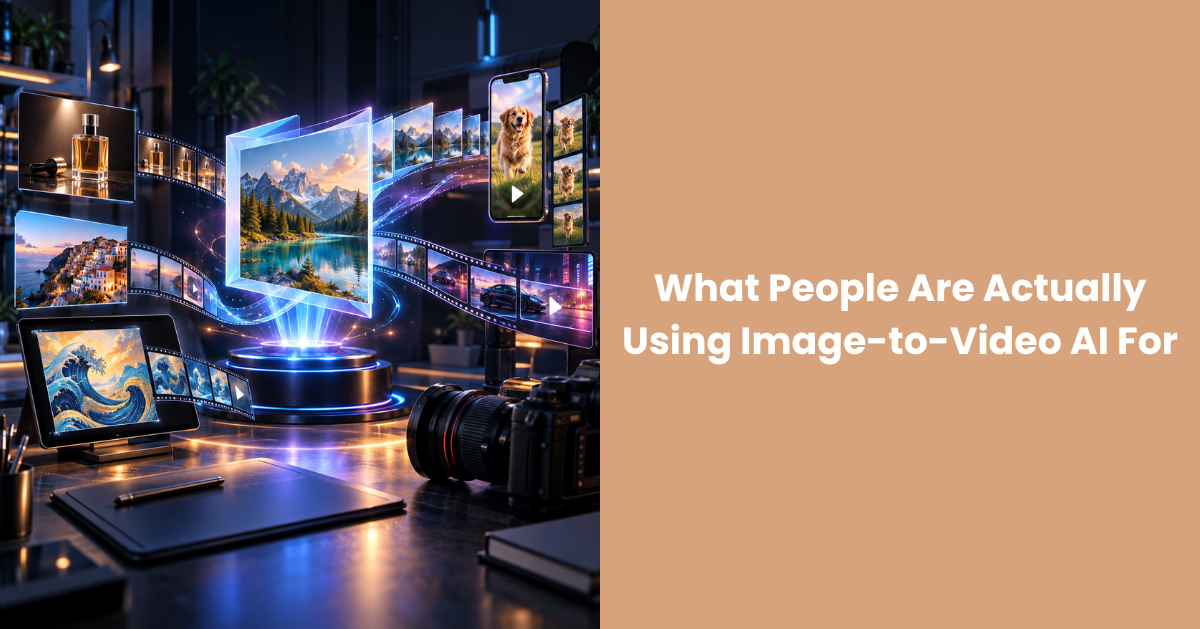
What's interesting isn't just that this works — it's what people are actually doing with it. The use cases go far beyond flashy demos, and looking at them tells you more about the technology than any spec sheet could.
Bringing Old Family Photos Back to Life
One of the most emotional uses of this technology has nothing to do with marketing or content creation. It's personal. People are taking faded photographs of grandparents, childhood homes, or long-gone pets and adding gentle, realistic motion — a slight smile, a breeze moving through hair, eyes that seem to blink.
The prompt doesn't need to be complicated here. Something as simple as "a soft breeze moves through the scene, the person blinks slowly" is often enough to turn a flat, static memory into something that feels alive again. It's a small technical trick, but the emotional weight behind it is anything but small.
Product Photos That Actually Sell
On the business side, small shop owners and independent sellers have found a practical use that doesn't require hiring a videographer. A single product photo — a candle, a pair of shoes, a piece of jewelry — can be turned into a short clip showing it rotating, catching light, or sitting in a lifestyle setting.
Why Motion Beats a Still Shot
Online shoppers scroll fast, and a still image has to fight for attention in a feed full of other still images. Motion naturally draws the eye, even for a second or two. A short video of a product slowly turning or a fabric gently moving gives a sense of texture and quality that a flat photo simply can't communicate, and it doesn't require a studio setup to produce.
Social Media Content Without a Camera Crew
Content creators face a constant demand: more posts, more often, with less time to make each one. Image-to-video tools have become a quiet workaround. A single travel photo can become a short establishing clip. A flat-lay of ingredients can turn into a few seconds of steam rising or a hand reaching into frame. None of it requires filming anything new.
This doesn't replace real filming, and it isn't meant to. It fills a specific gap — the moments where a photo exists but a video doesn't, and reshooting isn't realistic. A free seedance video generator is often enough for testing this kind of quick content before deciding it's worth building into a regular routine.
The One Skill That Makes All the Difference: Writing the Prompt
Across every use case above, the results depend almost entirely on how the prompt is written, not just which tool is used.
Describe What Moves, Not the Whole Scene
A common beginner mistake is trying to describe the entire image again in the prompt, as if the AI can't already see it. It can. What it needs is direction: what should move, and how. "The water ripples slowly" is far more useful than a full re-description of a lake at sunset.
Match the Energy to the Purpose
A memory clip and a product ad need different energy. A family photo usually calls for slow, quiet motion. A sneaker ad benefits from something snappier — a quick turn, a flash of light. Naming that energy directly in the prompt, like "slow and quiet" versus "sharp and energetic," shapes the pacing far more than people expect.
Accept That the First Try Is a Draft
Even with a well-written prompt, the first result is rarely perfect. Treating it as a draft rather than a final product changes the whole experience. A small wording change — swapping "fast wind" for "gentle breeze," for example — can completely shift the outcome without needing to start over.
Getting Started Without Overthinking It
There's a temptation to research every setting and feature before trying any of this, but the fastest way to understand image-to-video AI is simply to use it. Pick one photo that means something, write one honest sentence about what should move in it, and see what comes back.
From there, the pattern becomes obvious pretty quickly: specific prompts beat vague ones, short clips beat overly ambitious ones, and small edits beat starting from scratch. None of that requires technical knowledge — just a bit of patience and a willingness to try a few versions.
What started as a novelty is turning into something closer to a normal creative habit, sitting somewhere between photography and filmmaking, available to anyone with a photo and a sentence.
