



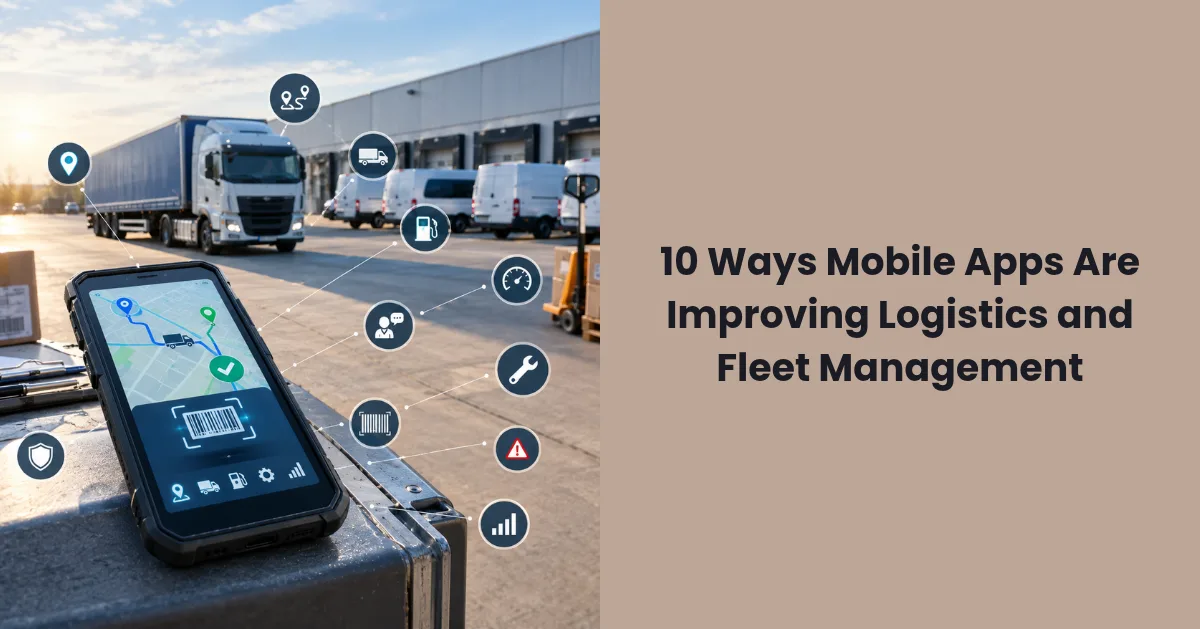
1. Real-Time GPS Tracking
Vehicle and consignment positions are available on the same dashboard, meaning that a dispatcher can provide the answer to “Where’s my order?” within seconds rather than having to do this after a series of phone calls. Geofencing makes it possible to have notifications for whenever a vehicle is entering and leaving the delivery area. People can notice the delay and react before the customer does. With time, the system will show the route, depot, or time slot that repeatedly causes issues for the company, allowing the management to base their decisions on actual facts.
Business gain: fewer status calls and faster exception handling.
2. AI-Driven Forecasting and Dispatch
Models from machine learning analyze previous trips, weather conditions, and traffic patterns to determine delivery times, estimate the level of demand, and identify deliveries that could be delayed. These same models will also be able to make suggestions about who and what should perform the next delivery based on their current locations, cargo, and availability. This reduces a lot of guessing work for the dispatcher especially when there are several deliveries scheduled on the same day. More information also allows for better accuracy, and therefore, the recommendations are more reliable over time.
Business gain: dependable delivery promises and better capacity planning.
3. Smarter Route Optimization
Route tools weigh live traffic, road closures, vehicle capacity, and delivery windows to suggest the most efficient path for each vehicle. When conditions change mid-shift, drivers receive updated directions automatically. That removes guesswork and cuts the wasted mileage that comes from last-minute detours. A route that looked fine at 6 a.m. rarely stays fine all day, and the app adjusts for that without anyone having to phone the driver. Across a whole fleet, small savings on each trip add up to noticeable reductions in fuel use, overtime, and vehicle wear.
Business gain: lower fuel spend and more stops completed per shift.
4. Digital Proof of Delivery
E-signatures, pictures, and barcodes are captured by the drivers on the spot, and the information immediately gets transmitted to the back office. The dispatchers do not need to wait for days to get back the paper slips, while the customers will have the confirmed receipt within minutes. If any dispute arises regarding the delivery at a later point, the date-stamped picture and signature provide proof without much exchange of messages. Information that would get lost, smeared, or filed under the wrong category automatically gets stored, making it instantly available.
Business gain: quicker invoicing and fewer delivery disputes.
5. Driver Safety and Behavior Monitoring
The alerts help the manager offer feedback to the driver without making any assumptions based on facts. Safe driving can be measured with the help of the scorecard in the program, which fosters healthy competition between the groups. The manager is also provided with the facility to use the trip history in case any dispute arises due to a customer complaint or confusion on the road. This information not only aids in monitoring the drivers but helps them with positive reinforcement because their good behavior is acknowledged. Safe driving also ensures less vehicle damage.
Business gain: fewer accidents and lower insurance exposure.
6. Predictive Vehicle Maintenance
Telematics data flows into the app, which flags wear patterns, fault codes, and service due dates before a breakdown occurs. Maintenance teams can then schedule repairs during planned downtime instead of reacting to roadside failures, which are always more expensive and more disruptive. Many businesses work with a logistics application development company to connect these diagnostics directly to driver and manager workflows, so an alert reaches the right person without extra steps. A fleet that is serviced on time also spends fewer days with vehicles sitting idle in the workshop, and customers see fewer missed deliveries.
Business gain: less unplanned downtime and longer asset life.
7. Automated Compliance and Documentation
Driver logs, inspection sheets, and documents that are stored on a cloud take the place of paper binders and physical filing systems. On-demand reports can be made, and this will make auditing easier, as well as reduce any possible fines due to the absence of certain documents. Deadlines for renewing licenses and doing vehicle inspections will not have to be manually monitored because all of this can now happen automatically. For companies operating in different jurisdictions and under regulated conditions, this is one of the unspoken advantages of using mobile systems.
Business gain: audit-ready documentation at any moment.
8. Instant Driver and Dispatcher Communication
In-app messaging and push notifications deliver job changes, address updates, and priority requests immediately. Dispatchers no longer depend on long phone calls, and drivers get clear, structured instructions that let them keep their attention on the road. Shared task lists also keep warehouse, dispatch, and field teams working from the same information, which reduces the small miscommunications that slow a day down. Because every message is logged, there is also a clear record of who was told what and when, which helps when instructions need to be reviewed later.
Business gain: quicker reassignments and less idle time.
9. Fuel and Cost Control
Fuel costs are usually the highest variable costs for the fleet, and with the apps, this cost can be easily tracked. They measure fuel usage for each trip and each vehicle and highlight any abnormal behavior like theft of fuel, excessive idling, and inefficiency in routes. The finance department will have better data on costs and will thus be able to quote better prices and prevent losses from projects being quoted. It will be easy to know how each route, each vehicle, and each customer affects the bottom line.
Business gain: clearer cost visibility per route and per customer.
10. Better Customer Experience
Live tracking, alerts, and rescheduling make sure your customers are always updated without having to do anything on your side. Updates help remove all fears of delays and create trust. Getting feedback after the delivery also helps you understand how well your services work because sometimes there can be things that you might not notice until you receive feedback. Customers who can track where their purchase is going and schedule new delivery times when needed are much less likely to reach out for help or express their dissatisfaction.
Business gain: higher satisfaction and repeat business.
Key Features to Look for in a Logistics Mobile App
The key attributes of a good shortlist should be live tracking capability, offline feature in case of poor signal coverage, smooth integration with TMS, ERP, and telematics systems, role-specific dashboard, robust data security, and scalability of the solution architecture. They are solutions to problems that will definitely arise at some point in time, which is why it makes more sense to verify their presence beforehand.
It is important to consider performance in practical conditions as well as features of the software. Try the app with slower devices, since some drivers use cheaper smartphones. Evaluate the options for reports, as it is important to customize analytics to be able to take action rather than just collect information. See if dashboards can be customized to suit dispatchers, finance personnel, and management, as each one needs its own dashboard. The last thing to do is to ensure that the vendor provides updates and support after deployment, since an application abandoned by the provider after its deployment is practically useless.
Challenges of Implementing Mobile Apps in Logistics and Fleet Management
Even a well-chosen app can stumble during rollout. These are the problems that come up most often, along with practical ways to handle them.
- Low acceptance by drivers: Implement user-friendly interfaces along with quick training and highlight the early successes to convince drivers that it benefits them too. It also helps to get a couple of experienced drivers involved in testing.
- Integration of legacy system: Perform an audit of the existing TMS/ERP and go for an API first approach.
- Data security concerns: Apply encryption, role-based access, and clear data ownership policies from the start, and review them whenever new users or partners are added.
- Connectivity gaps: Choose an offline-first design that syncs automatically once a signal returns, so drivers in rural areas or underground depots can keep working without interruption.
- Unclear ROI: Pilot the app on a single route, track clear KPIs, and review performance regularly before scaling. A small, well-measured pilot makes it far easier to justify wider investment.
Conclusion: Turning Mobile Technology into a Logistics Advantage
Mobile applications have evolved from optional tools into essential components of logistics and fleet management. Features such as real-time tracking, AI-powered predictions, paperless workflows, and customer notifications help reduce operational costs and improve efficiency. They also keep dispatchers, drivers, and customers informed about delivery progress. By prioritizing key features and implementing them gradually, businesses can minimize truck idle time, optimize delivery routes, and achieve greater savings.


