



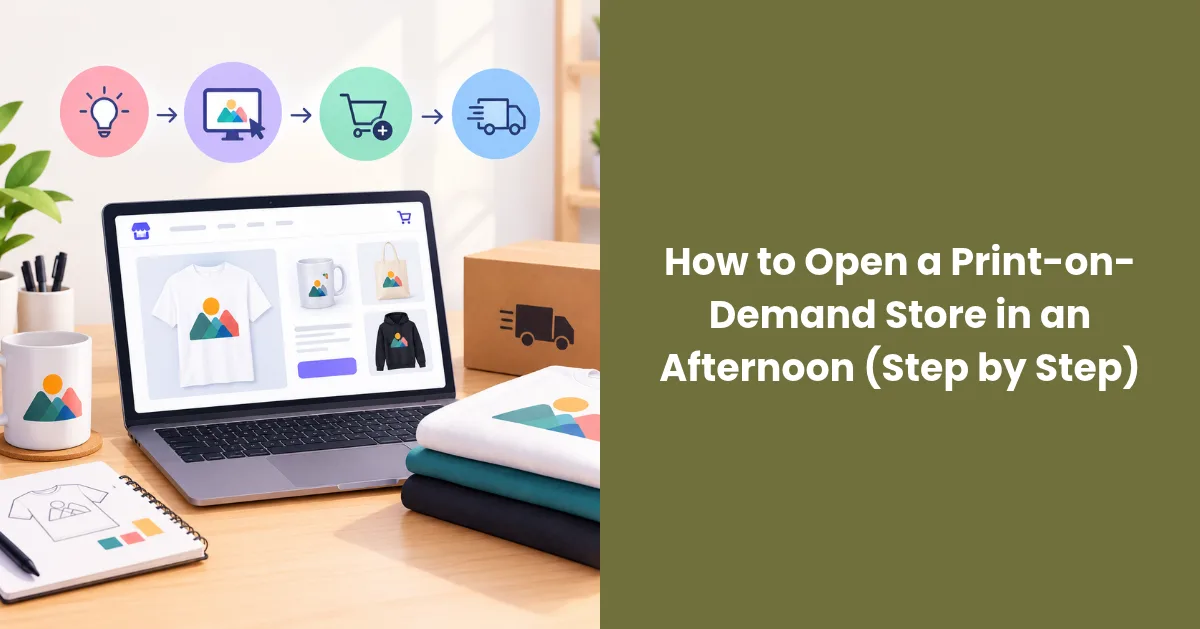
Sell physical products without buying any
The usual barrier to a product business is stock. Print on demand removes it. You connect a store to a leading platform like Printify or Printful, add designs to existing blank products, and each item is only manufactured after a customer pays. Your outlay is a domain, a store plan and a couple of samples.
Per-unit costs are higher than buying in bulk, so margins are thinner. But you can be wrong about a design forty times without it costing you anything but time.
Why this suits UK sellers in particular
Traditional ecommerce means buying inventory in bulk, then finding somewhere to keep it. That might be a spare room, a garage or a rented self-storage unit, and each one adds a monthly cost before you’ve made a sale. POD sidesteps this. Your supplier holds the blank products and prints to order, so your inventory risk and your storage bill both drop to near zero.
That makes it a sensible way to test a business idea before committing startup capital to stock.
The Print-on-Demand Landscape: Printify & Printful
When choosing a print-on-demand partner, Printify and Printful stand out as two leading platforms in the industry. Printify operates a flexible network model connecting sellers to third-party print providers worldwide, offering competitive pricing and a vast catalog. Meanwhile, Printful provides centralized fulfillment and consistent quality control. Together, as part of FYUL, they form a robust infrastructure for e-commerce creators.
What you need before you start
- A niche and a few designs. Start narrow, such as dog-walking mugs or climbing-themed tees, rather than “t-shirts for everyone.”
- A print-on-demand account. Sign up for Printify or Printful. Free tiers are available to start with no upfront inventory costs.
- A storefront. An independent branded e-commerce store gives you full ownership, while a popular online marketplace provides built-in buyer traffic.
- A payment method for your store plan and for sample orders.
- A domain name, if you choose an independent e-commerce storefront platform.
Step 1: Choose your sales channel (15 minutes)
Online Marketplaces offer the fastest route to a first sale because active shoppers are already searching there. You pay standard listing and transaction fees, and your shop operates alongside competing sellers.
Standalone Storefront Platforms take slightly longer to set up. You own the customer relationship, brand design, and store control, but you pay a monthly subscription plan and must drive your own traffic.
Many sellers start on a marketplace to validate a design, then add an independent online storefront once something sells. Check each platform’s current pricing before you commit, as plans and fees change.
Step 2: Create your POD account and connect your store (15 minutes)
Sign up for a free plan on Printify or Printful, then use their store integrations to link your online sales channel. The connection syncs products and orders automatically. When someone buys, the order goes to production with no manual step from you.
Step 3: Pick products from the catalog (20 minutes)
Print-on-demand product catalogs list blank items such as shoes, tees, hoodies, mugs, tote bags, posters and phone cases. For every product, compare:
- Base cost. This is what you pay per item.
- Print provider location. UK or EU providers usually mean faster delivery and fewer customs issues for British customers.
- Production time and shipping rates.
- Reviews and print quality.
Start with two or three products. A small, focused range is easier to market than a sprawling one.
Step 4: Add your designs with the mockup generator (30 minutes)
Upload your artwork and place it on each product using the built-in mockup tool. Use high-resolution files, and check the print area guidelines so nothing is cropped. If you’re not a designer, you can commission artwork, use your own illustrations, or work from licensed templates. Always make sure you have the right to use anything you upload.
Step 5: Work out your pricing and unit margin (15 minutes)
This step decides whether your shop makes money. For each product, calculate:
Selling price − base cost − shipping (if you absorb it) − platform fees − payment processing = profit per sale
POD base costs are higher than bulk wholesale, so aim for a healthy mark-up rather than racing to the bottom on price. Your unit margin is typically smaller per item than with stocked goods. What you gain in return is zero inventory risk.
Step 6: Order samples (10 minutes to order, days to arrive)
Order at least one sample of each product before you promote it. You’ll check print quality, colour accuracy, fit and packaging, and you’ll get real photos for your listings. This is usually the largest cost of getting started, and worth every penny.
Step 7: Write your listings and publish (30 minutes)
Write clear titles with the product type and the audience, use all available photo slots, and describe sizing, materials and delivery times plainly. Then publish. On online marketplaces, keywords in titles and tags help shoppers find you. On a standalone store, you’ll also want a simple About page, a returns policy and a contact page.
Step 8: Plan your first traffic (ongoing)
A live store is not a busy store. Realistic first steps include:
- Posting your designs on Instagram, TikTok or Pinterest
- Sharing the shop with friends, family and niche communities
- Using marketplace search tools and, later, modest paid ads once you know what converts
Costs vary, so verify current pricing before you start. Even so, you can launch for a small fraction of what a stocked business needs, comfortably within a sub-£200 budget.
Honest trade-offs
- Thinner margins than bulk buying.
- Less control over shipping speed and quality, since a third party prints and ships.
- Heavy competition in popular niches, so differentiation matters.
- Branded packaging is limited compared with fulfilling orders yourself.
If your orders grow into hundreds a month, it’s worth comparing POD against bulk ordering and a storage solution. For testing ideas and starting lean, POD is hard to beat.
FAQs
Do I need to hold any stock for a print-on-demand store?
No. Products are printed and shipped only after a customer orders, so you need no inventory and no storage space.
Are POD platforms free to use?
Major platforms like Printify and Printful offer free plans with no upfront cost. You pay for the products you order, whether that’s samples or customer orders, and any optional premium plan is up to you.
Should I use an online marketplace or a standalone store platform?
Marketplaces are quicker and bring built-in buyer traffic. Standalone storefront platforms give you more brand control and independence. Many sellers start with one and add the other.
How long does it take to set up?
The setup steps above take a few hours. Sample delivery and your first marketing efforts take longer.
What is the main risk?
Margins. Work out your unit margin carefully before you publish anything.


