



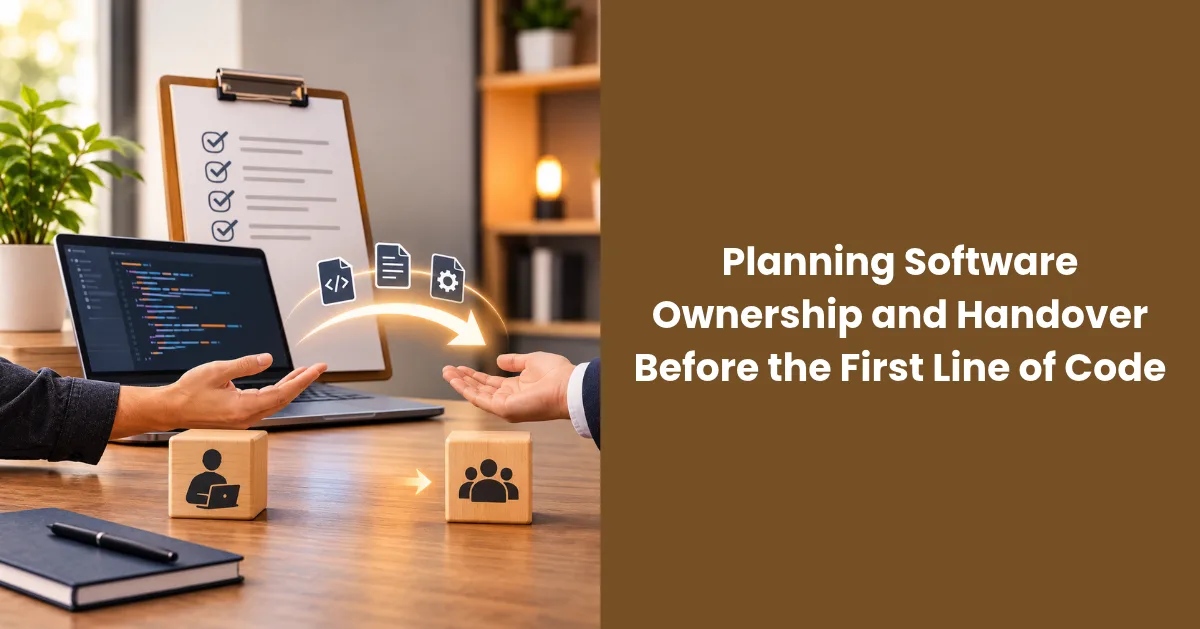
The Foundation of System Sovereignty
Securing full operational authority over custom platforms requires explicit alignment on administrative control, technical assets, and cloud environments. External software agencies should construct system architectures within cloud accounts registered under the client enterprise rather than third party vendor profiles. This practice ensures continuous oversight of cloud infrastructure, data stores, and billing accounts from day one.
Central code repositories must be managed under corporate administrative rights. Engineering teams ought to commit code updates directly to the client source control management platform through automated integration pipelines. Granting external developers role based permissions allows collaboration while preserving organizational ownership of source code, commit histories, and deployment configurations.
Vendor selection warrants rigorous evaluation to confirm technical compatibility and long term operational reliability. Organizations evaluating external engineering partners must analyze past case studies, examine tech stack alignment with internal capabilities, establish structured communication channels, and mandate transparent financial tracking. Prior to executing contracts, decision makers must confirm that prospective vendors maintain established protocols for continuous knowledge transfer and structured platform transitions.
Infrastructure Access and Repository Governance
Proper ownership planning extends beyond simple repository access. Organizations require full administrative authority across every operational tier of their software ecosystem:
- Primary source code repositories and version control platforms
- Production, staging, and development hosting environments
- Cloud infrastructure management panels and server consoles
- Database management systems and secure storage buckets
- Third party service accounts, payment gateways, and communications APIs
- Domain name registrants and transport layer security certificates
Maintaining complete control over these environments protects operational continuity if external team compositions change. Securing direct access to error logging tools and system monitoring dashboards allows internal leaders to track platform performance independently during active development cycles.
Ensuring total operational control relies heavily on establishing clear policies for software ownership prior to commencing initial system architecture design.
For companies seeking reliable custom software solutions, engaging experienced engineering partners who prioritize transparent governance remains essential. As the technical leadership at SoftDoes notes, "True software ownership is not merely a contractual clause; it is an architectural commitment that ensures clients maintain full control over their infrastructure, codebases, and deployment pipelines from the initial sprint through long term scale."
Comprehensive Technical Documentation Standards
A software codebase remains fragile if operational knowledge exists solely within the minds of the original development team. Detailed technical documentation serves as the primary bridge between vendor delivery and internal long term system maintenance. Organizations must mandate comprehensive documentation deliverables as part of core sprint completion criteria.
Essential documentation artifacts include system architecture diagrams outlining component interactions, data flow schemas, and external API dependencies. Developers must provide clear environment setup guides that allow a qualified software engineer to spin up a local development environment from scratch without external assistance. Database entity relationship diagrams and schema definitions ensure data models remain understandable during future refactoring.
Api documentation must detail endpoints, payload structures, authentication methods, and rate limits. Furthermore, operational runbooks should document routine maintenance procedures, database backup routines, disaster recovery steps, and deployment procedures. Requiring documentation updates alongside functional code delivery prevents information bottlenecks and reduces long term maintenance planning costs.
Inventorying Third Party Components and Licensing
A complete software handover package must include a thorough bill of materials listing every external library, SDK, and third party service integrated into the application. Each component should be cataloged with its version number, license type, and operational purpose. Identifying license requirements early prevents legal issues regarding copyleft open source licenses or commercial licensing fees.
Managing third party dependencies also involves tracking API keys, access tokens, and subscription details for external platforms. Client teams must maintain centralized password management vaults to store API credentials, service accounts, and encryption keys securely. This structured approach prevents sudden service interruptions caused by expired trial accounts or unmanaged credential changes.
A detailed analysis featured in Ars Technica highlights how unmanaged technical debt and incomplete system documentation frequently compound long term software maintenance expenses across growing enterprises. Proactive governance mitigates these financial risks by enforcing strict documentation standards and code maintainability checks from project handover inception.
Assessing Internal Capacity and Support Personnel
Organizations should identify specific personnel responsible for post launch maintenance, server monitoring, and application support. Evaluating internal skill sets against the platform tech stack reveals knowledge gaps early in the development lifecycle. If internal teams lack expertise in specific frameworks or cloud architectures, leaders can schedule targeted training sessions or secure extended post launch support agreements with the engineering vendor.
Establishing clear communication protocols between external vendors and internal support teams ensures smooth knowledge sharing. Structured shadow periods, where internal engineers observe vendor deployments and system maintenance tasks, build practical confidence before full operational responsibility shifts in house.
Verifying Handover Readiness Through Structured Audits
Independent code quality reviews assess adherence to industry standards, modular architecture principles, and security best practices. Automated vulnerability scanners identify potential security risks within application code and third party dependencies. Conducting load and stress testing verifies system stability under heavy user traffic, ensuring infrastructure configurations scale effectively.
A practical readiness test involves executing a clean environment deployment trial. An independent engineer, using only the provided documentation and repository access, attempts to build, configure, and deploy the application to a fresh staging server. Successfully completing this exercise proves that technical documentation is complete and that the platform can be maintained without relying on original developers.
Planning Post Launch Maintenance and System Evolution
Establishing structured post launch support models defines expectations for bug resolution, infrastructure monitoring, and minor feature updates. Organizations should establish clear service level agreements covering incident response times, system uptime targets, and emergency support channels.
According to research published by MIT Technology Review, strategic digital transformation initiatives achieve significantly higher long term success rates when enterprise leaders align technical architecture directly with organizational governance frameworks. Preparing internal teams to manage routine operational tasks while retaining vendor availability for complex architectural expansions creates a balanced support structure.
Strategic Alignment for Long Term Success
Planning software transition before writing code transforms technical handover from a stressful event into an orderly process. By securing direct cloud access, establishing documentation standards, inventorying third party components, and validating internal team readiness, business leaders maintain full control over their technology assets.
Establishing unambiguous expectations regarding repository management, system architecture, and operational governance protects corporate investments and ensures long term flexibility. Organizations that prioritize ownership frameworks from the start position themselves to scale efficiently, adapt to market shifts, and maintain resilient custom platforms for years to come.


