



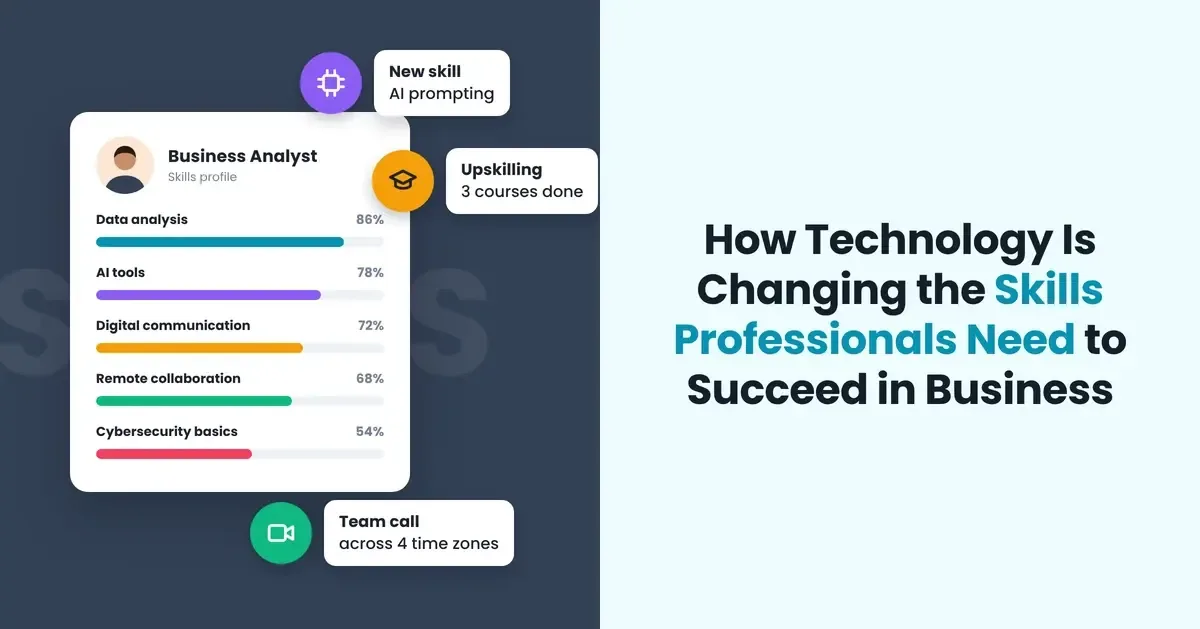
What Today's Professionals Are Up Against
Plenty of capable people reach a point where the skills that carried them this far no longer carry them forward. The gap often becomes obvious when someone considers a course of some kind, only to realize that stepping away from a full workload to sit in a classroom is simply not realistic for anyone holding down a demanding role. Structured instruction delivered online removes that obstacle, because it works around the hours already committed rather than competing with them. For professionals who want their abilities to match the responsibilities in front of them, a business management online course by Keys to the Vault offers a direct and workable way to close the distance. Choosing that route puts the decision back in the hands of the person doing the work, which is exactly where it belongs.
How Everyday Work Has Been Reshaped
The ordinary rhythm of a working day looks almost nothing like it did twenty years ago. Reports that once required hours of manual assembly now appear automatically, inventory counts update themselves, and customer records are visible to anyone who needs them within seconds. The value of an employee is no longer measured by how well that person handles routine processing, because the systems already handle it. What matters now is judgment, meaning the ability to read what the output is saying and decide what should happen because of it. That change has quietly raised the bar for almost every role in a company.
Communication Across Distance and Time
Teams spread across cities and countries are now routine rather than unusual, and that arrangement places a heavy load on written communication. A message that would have been clarified in thirty seconds across a desk can now take a full day to untangle through three replies. Clear writing has turned into a genuine business skill, because so much of the work depends on being understood the first time. The same applies to meetings held through a screen, where attention is harder to hold and vague talk is punished quickly. Professionals who say what they mean, confirm what was agreed, and keep others informed without being asked tend to rise faster than those who do not.
Why People Skills Have Become More Valuable
There is a common assumption that automation reduces the need for human qualities, when the opposite has proved true. The more that machines absorb, the more the remaining work depends on persuasion, negotiation, trust, and the handling of disagreement. Customers still want to feel heard, suppliers still respond to relationships, and colleagues still work harder for someone they respect. None of this can be delegated to a system, which is why these qualities have grown more valuable rather than less. They are also the hardest abilities to replace, which makes them worth deliberate attention.
Adaptability as a Lasting Strength
Change used to arrive in waves that a company could prepare for over several years. It now arrives constantly and in smaller pieces, which rewards a very different temperament. The useful trait is not knowing every new tool, since that is impossible, but being willing to pick one up without resistance and work out what it does. People who treat each change as a threat spend their energy defending old habits, while people who treat it as a normal part of the job stay productive throughout. Over a career, that difference compounds into something significant.
Financial Awareness in a Faster Market
Many professionals spend years doing excellent work without ever understanding how their efforts connect to the health of the company. That blind spot matters more now, because decisions are made quickly and the person who can explain the financial consequence of a choice carries real weight in the room. Knowing how revenue turns into profit, where cash gets trapped, and why a busy month is not always a good one changes the way a person contributes. It also changes how senior leaders view that person. Business sense of this kind is not reserved for the finance department, and treating it as though it is holds many careers back.
Leading Teams That Depend on New Tools
Managing people who work with unfamiliar systems calls for a steadier hand than managing people who all do the same thing in the same room. Some team members will embrace a new tool immediately while others quietly avoid it, and both reactions need handling without drama. A good manager sets expectations clearly, makes it safe to admit confusion, and keeps the focus on the outcome rather than the software. Leadership has become less about supervision and more about removing obstacles so that skilled people can get on with their work. That is a different craft from the one most managers were originally promoted for.
Preparing for What Comes Next
Nobody can predict exactly which tools will dominate the next decade, and chasing that prediction is wasted effort. What can be predicted is that clear thinking, sound judgment, honest communication, and a willingness to keep building ability will remain valuable regardless of what arrives. Professionals who invest in those foundations find that each new development becomes something to use rather than something to survive. The technology will keep changing, and the people who understand the business behind it will keep succeeding. That has always been true, and it is more true now than it has ever been.


