



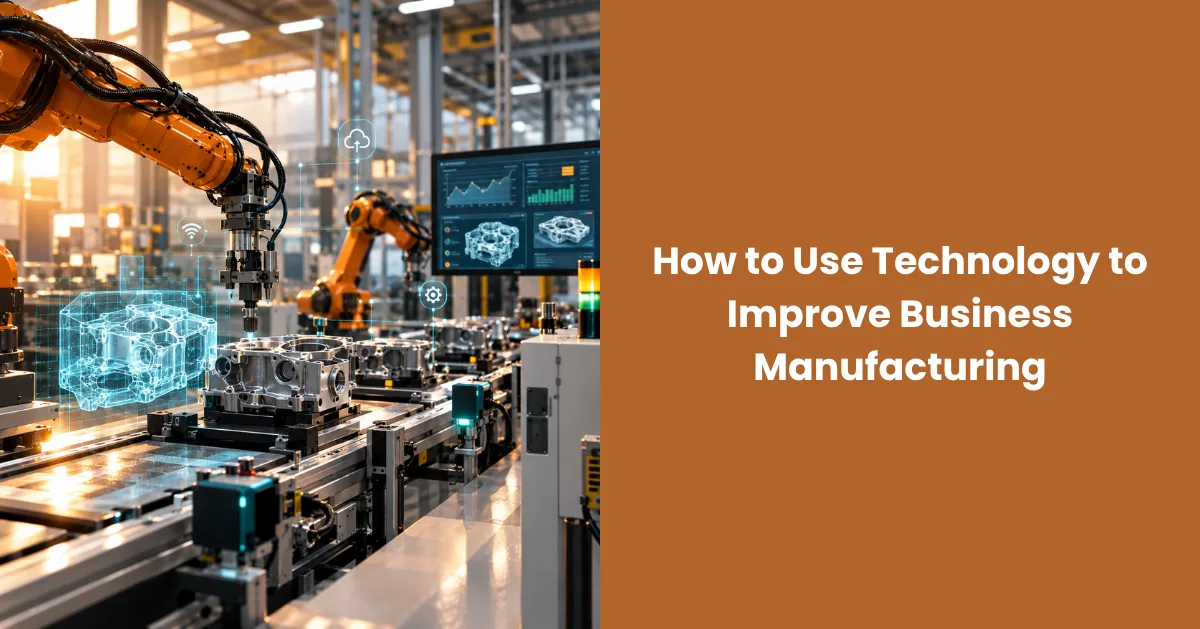
From automated machines to smart data analysis, technology offers many solutions that can help businesses succeed. Whether you are on the factory floor or managing production remotely, knowing how to use these technologies can improve your manufacturing process. Let's look at how to integrate technology effectively into your manufacturing strategy.
Automation
Automation is central to modern manufacturing. With advanced machines and robots, businesses can reduce human error and increase efficiency. Automated systems handle repetitive tasks accurately, freeing up staff to focus on more complex jobs.
For example, robotic arms can perform tasks like assembly, welding, and painting. This speeds up production and ensures high-quality work, which is vital for keeping customers happy. Additionally, machines with sensors let businesses track real-time data and quickly fix problems as they arise. This creates a more efficient operation that can adjust to changing demands.
Welding Machines
Welding machines are important in manufacturing because they join materials together effectively. Today's welding technology, such as MIG and TIG systems, has improved significantly, making the process faster and more accurate. These machines create strong, long-lasting welds and help reduce waste, which is ideal for manufacturers focused on sustainability.
Modern welding machines have digital controls that make it easy to adjust settings. This lets operators quickly switch between projects or materials without wasting time. Setting specific welds ensures consistent quality, which is vital for maintaining product integrity. With advanced welding technologies, manufacturers can reduce risks and enhance overall production flow.
Data Analytics
Data analytics is one of the most important technologies in manufacturing. By collecting and analyzing data from machines and production processes, manufacturers can make informed decisions that increase efficiency. They can monitor workflows and identify problems or delays that may affect production.
For example, if a machine is underperforming, analytics can help identify the reason, such as maintenance needs or incorrect settings. With this information, businesses can take steps to prevent downtime. Additionally, analyzing customer feedback and sales trends helps adjust production schedules, ensuring that inventory meets market demands without overstocking.
Supply Chain Management
Using advanced technology in supply chain management gives manufacturers better control and efficiency. Tools like RFID technology provide real-time information about product location and status throughout the supply chain. This transparency is crucial for tracking materials from suppliers to the assembly line and helps ensure timely project delivery.
Additionally, modern software can improve inventory management by predicting supply needs based on past trends and future expectations. By knowing when to restock or change orders, manufacturers can reduce excess-inventory costs and minimize waste. Good supply chain management builds stronger supplier relationships and creates a smoother production flow.
Collaboration Tools
Technology also improves communication and teamwork within manufacturing teams. With remote access tools and cloud-based software, employees can easily communicate, share documents, and access information from anywhere. This is especially important when different teams work on different parts of a project at the same time.
For instance, project management software helps departments like engineering, production, and quality control work together efficiently. Real-time sharing of updates and feedback helps streamline processes, making it easier to adapt to changes or solve problems quickly.
Training and Development
As technology changes, employees must update their skills. Innovative training tools, like virtual reality (VR), can immerse employees in realistic scenarios, allowing them to learn to operate complex machinery without risk. These training methods are often more engaging than traditional classroom sessions.
E-learning platforms allow employees to learn at their own pace, which can improve knowledge retention and confidence. Investing in employee development enhances operational efficiency and boosts morale, resulting in a more committed workforce.
Sustainability Practices
Technology also supports sustainable manufacturing practices. Energy-efficient machines and smart resource management systems lower energy use and costs. Technologies that monitor emissions and waste help companies meet environmental regulations while promoting corporate responsibility.
For example, advanced monitoring systems can reveal where energy is wasted. By addressing these issues, manufacturers can operate more eco-friendly, appealing to today's environmentally conscious consumers. This not only improves brand image but can also save money, showing that sustainable practices benefit both the planet and the bottom line.
Technology significantly changes manufacturing. It improves productivity through automation and enables real-time data analysis. Embracing technology is not just about keeping up with competitors. It drives innovation and efficiency in manufacturing. Engaging with these advances can lead to a smarter, more reliable, and efficient manufacturing future.
Predictive Maintenance
Predictive maintenance helps manufacturers prevent equipment failures by using data analysis and machine learning. By monitoring machines in real time and analyzing their performance, manufacturers can schedule maintenance during planned downtime. This approach reduces disruptions to production.
It also saves money that would be spent on unexpected breakdowns and helps equipment last longer. For example, sensors can detect vibrations or temperature changes that may signal problems. Addressing these issues early improves maintenance, lowering major repairs and downtime. Companies that use predictive maintenance experience better efficiency and a more reliable production process, giving them a competitive advantage.
Internet of Things (IoT)
The Internet of Things (IoT) has transformed manufacturing by connecting machines and devices to the internet. This connection allows for easy data sharing and monitoring. IoT devices collect important information about machine performance, environmental conditions, and production efficiency. This helps managers make informed decisions, improve workflows, and identify issues.
IoT also enables remote monitoring, so businesses can manage operations from anywhere and respond faster. By using IoT solutions, manufacturers gain insights into their processes, leading to continuous improvement and innovation while reducing costs and waste.
Augmented Reality (AR)
Augmented reality (AR) is changing manufacturing by improving training, maintenance, and assembly tasks. With AR, workers can see complex parts and assembly steps in real time, which improves understanding and accuracy. For training, AR can guide workers with digital instructions overlaid on real equipment, making learning easier. This method helps workers feel more prepared and confident.
Additionally, AR can assist technicians during repairs by providing visual aids and diagnostic information, which speeds up troubleshooting. Using AR improves efficiency, work quality, and workforce skills.
3D Printing
3D printing, also known as additive manufacturing, is becoming popular in manufacturing because it is flexible and cost-effective. This technology lets businesses create complex parts quickly and at lower cost, reducing lead times and material waste. With 3D printing, manufacturers can make prototypes for testing, enabling faster product design changes.
It also supports on-demand production, cutting the need for large inventories and lowering storage costs. Industries like aerospace and healthcare benefit greatly from 3D printing because it allows for customized parts to meet specific needs. By using 3D printing, companies can innovate, reduce costs, and respond more effectively to market demands.
Additionally, 3D printing supports sustainability by reducing material waste, as products are built layer by layer, using only the necessary material. As this technology keeps improving, integrating 3D printing into manufacturing will give companies a competitive advantage by fostering innovation, shortening lead times, and cutting costs.
Cybersecurity Measures
As manufacturing relies more on digital technology, protecting data and systems from cyber threats is essential. Manufacturers need cybersecurity measures to secure valuable information, production processes, and customer data. They should use strong security protocols such as firewalls, encryption, and multi-factor authentication to reduce risk.
Regular employee training on spotting phishing attempts and protecting sensitive information also supports overall security. Frequent risk assessments and updated security measures to address new threats are also crucial. By prioritizing cybersecurity, manufacturers protect their assets and build trust with customers and partners, ensuring long-term success in a digital world.
Integration of Artificial Intelligence
Artificial Intelligence (AI) is changing the manufacturing industry by helping businesses make smarter decisions. Manufacturers can use AI to analyze large amounts of data. This helps them predict demand, improve production schedules, and manage maintenance more effectively. For example, machine learning can forecast equipment failures before they happen, which reduces downtime and costly repairs.
Additionally, AI-driven quality control systems can check product quality in real time, spotting defects more accurately than traditional methods. By using AI in production, manufacturers can work more efficiently, improve workflows, and increase profits. As technology advances, adopting AI will be essential for manufacturers who want to stay competitive and meet consumer demands.
Augmented Reality for Maintenance and Repair
Augmented Reality (AR) is becoming an important tool in manufacturing, especially for maintenance and repair. AR overlays digital information onto the real world, allowing technicians to see complex machinery and system parts in real time. This helps them troubleshoot problems by following step-by-step instructions or viewing relevant information directly in front of them.
AR also lets remote experts assist on-site workers, reducing the time needed to fix issues. This technology improves repair accuracy and provides interactive training for new employees. By using AR, manufacturers can boost efficiency, limit equipment downtime, and improve overall productivity.


