If you've ever hit a CAPTCHA wall or watched your IP get banned mid-task, you already know how painful it is to operate without protection. A rotating proxy service doesn't just solve that problem – it changes the game entirely. Many data scraping services use rotating proxies to safely handle large-scale web data collection without getting blocked.
In this guide, we'll explain what rotating proxies are, how they work, and why they've become mission-critical for anyone running high-volume, high-value web tasks.
What Is a Rotating Proxy?
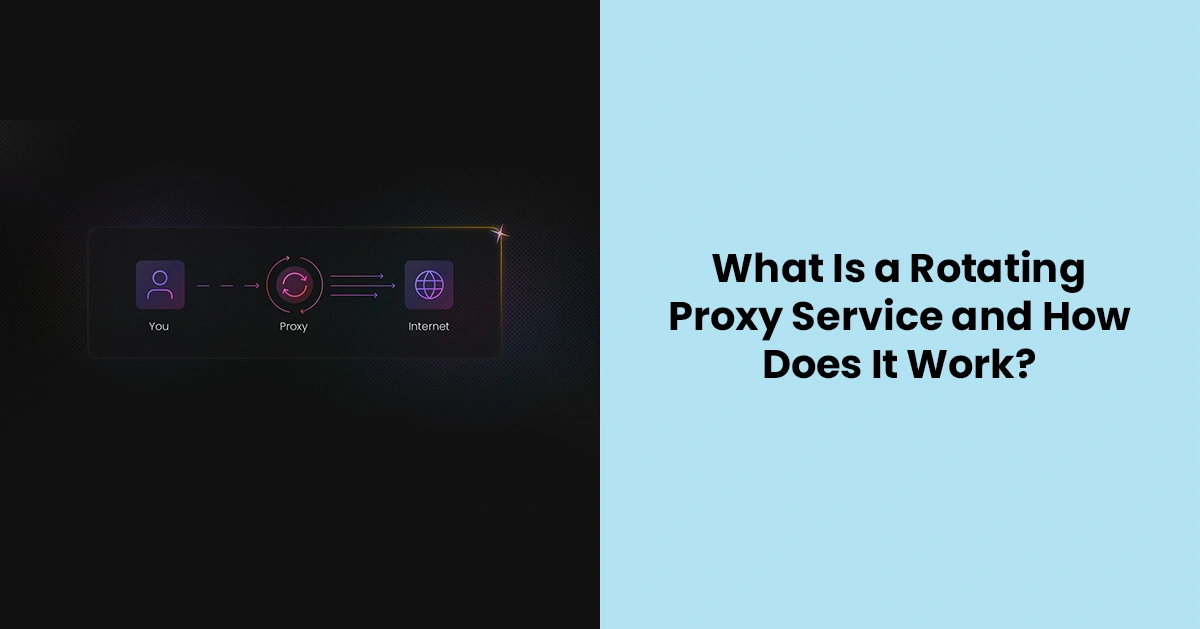
A rotating proxy automatically changes your IP address at defined intervals or for every new request.
Instead of routing your traffic through a single static IP, it dynamically cycles through a large pool of IP addresses, making it appear as though each request is coming from a different user or location.
Imagine trying to visit the same site hundreds of times in a row. Doing that with one IP is a fast track to a ban. But with rotating proxies, you show up as someone new each time.
These proxies can be residential or datacenter-based, but the residential rotating proxies variant is much harder to detect since it routes your requests through real user devices and ISPs, providing the highest level of legitimacy for sensitive operations like market research, social media management, or sneaker copping.
How Does a Rotating Proxy Work?
Here's what's happening behind the scenes:
- You make a request to visit a site, collect data, or automate a task.
- The proxy server assigns you a fresh IP address from its pool.
- Your request is sent then through that IP, hiding your real one.
- The IP rotates, either per request, per session, or at a set time interval.
- The process repeats, ensuring your identity stays fluid and undetectable.
Rotating Residential Proxies vs. Datacenter Proxies
While both datacenter and residential proxies can rotate, their differences matter, especially when stealth is key.
- Datacenter proxies are fast and cost-effective. But since they come from cloud infrastructure, they're easier for websites to flag.
- On the other hand, rotating residential proxies use actual IPs from real devices. They make your requests look like they come from just regular users, making them significantly more reliable for tasks that require low detection risk.
- You can even automate this process with a residential proxy API to manage high-volume requests across multiple networks securely.
That's why platforms with strict bot defenses, such as e-commerce sites, social media platforms, and travel aggregators, are far more likely to allow traffic from residential IPs than from data centers.
And that's also why, if you're looking for long-term success, choosing a provider that offers rotating residential proxies should be your go-to solution. BestProxy is one such provider, running a high-quality pool of rotating residential and datacenter IPs with fine-grained rotation controls and low failure rates, so you can scale scraping, automation, and verification tasks with far fewer bans and interruptions.
If you must use datacenter proxies, opt for dedicated datacenter proxies (one-user IPs) which can be more stable than shared IPs.
Key Benefits of Using a Rotating Proxy Service
Let's look at the main benefits you can reap from using a rotating proxy service.
Reduced IP Bans
Rotating proxies help distribute requests across multiple IPs, making it harder for websites to detect and block your activity. This is especially useful for large-scale tasks like web scraping or multi-account management, where static IPs are quickly flagged.
Avoiding Rate Limits and CAPTCHAs
Many websites implement rate-limiting systems that track the number of requests from the same IP address. Rotating proxies sidestep this by changing the IP behind every request (or at scheduled intervals), helping you avoid being throttled or forced to solve captchas repeatedly.
Geo-Targeted Access
You can choose IPs from specific countries or cities with rotating residential proxies. This is essential for localized testing, ad verification, pricing intelligence, or search engine results monitoring.
Stealth for Automation and Bots
Automation tools, bots, and crawlers are frequently blocked or rate-limited due to predictable traffic patterns. Rotating proxies help mask those patterns by continuously changing your IP address, making your traffic look more like natural human behavior.
When to Use a Rotating Proxy
If you're wondering whether a rotating proxy service is right for your operation, here are some of the most common and impactful use cases where they shine:
- Scraping websites at scale: Public data isn't always easily accessible. Whether you're gathering product listings, news articles, or market research, rotating proxies prevent your scrapers from being flagged or blocked due to repeated IP activity.
- Verifying ads across locations: Are you running international ad campaigns? Rotating residential proxies let you check how ads appear in different cities or countries without leaving your desk.
- Running localized SEO audits: Search engine results can vary by region. With geo-targeted rotating proxies, you can accurately audit rankings and featured snippets for users in specific markets.
- Managing multiple social accounts: Platforms like Instagram, Twitter, and LinkedIn often limit how many accounts you can manage from a single IP. A rotating proxy allows smoother multi-account workflows without risking bans.
- Monitoring competitor pricing: Price monitoring tools are often blocked after too many requests from the same IP. Rotating proxies ensure continuous access to competitor data, even on platforms with aggressive anti-bot protections.
- Aggregating travel or product data: If you're building a meta-platform or aggregator, you need constant access to structured data. Rotating proxies make it possible to collect that data at volume, without disruption.
- Handling any high-traffic, high-risk automation: Whether testing, scraping, account validation, or load balancing, any activity that stresses a single IP benefits from rotation.
How to Choose the Right Provider
Not all proxy services are created equal. Here's what separates a solid rotating proxy provider from the rest:
- IP pool size: More IPs = less chance of repeat usage and blocking.
- Residential IPs: Real-user IPs drastically reduce detection rates.
- Custom rotation rules: You want control – rotate per request, session, or time interval.
- Reliability: Look for 99.9% uptime, low latency, and minimal failed requests.
- Geo-targeting: Especially important for region-specific scraping or verification.
Wrapping Up
Rotating proxy services aren't just simple technical tools; they're strategic enablers. Whether you're automating at scale, collecting data at speed, or managing digital assets across regions, the ability to switch IPs seamlessly is what keeps your operation smooth and sustainable.