



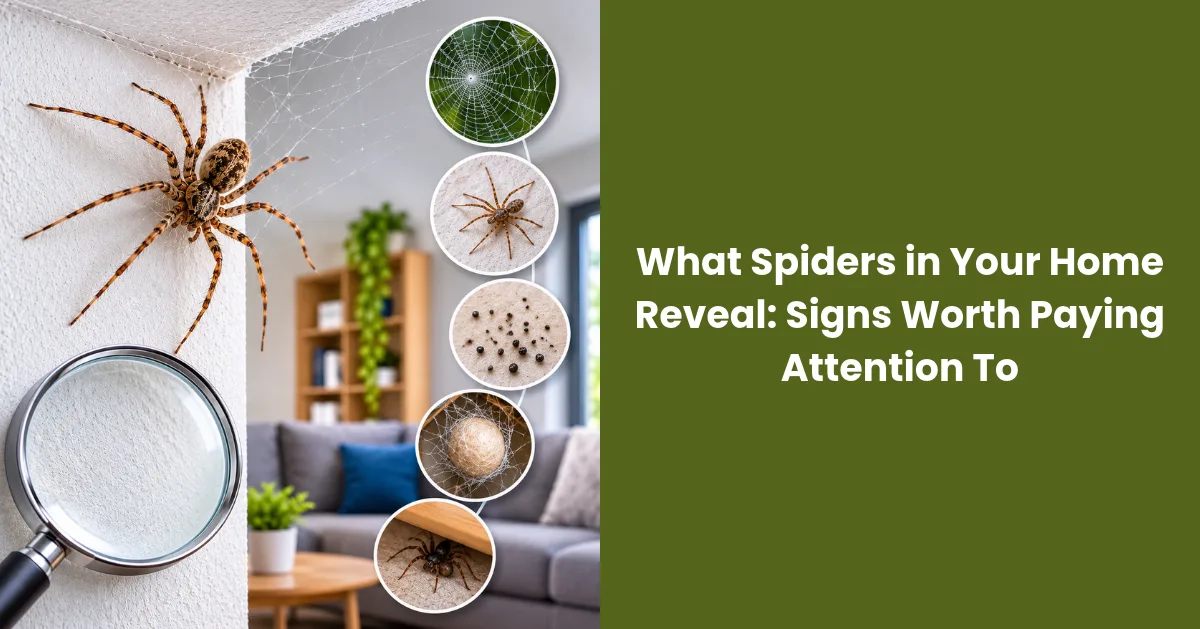
A Spider Sighting Can Point to Other Insects
Spiders are predators. Many feed on flies, moths, mosquitoes, ants, and other small arthropods. Regular sightings may therefore suggest that insects are available inside or around your home. Outdoor lights can attract flying insects after dark, while food residue, open bins, and standing water may support other pests.
This does not mean every spider indicates a serious insect problem. A single spider may simply have wandered indoors, and many species are harmless or beneficial because they help control insect populations. Look for a pattern: repeated webs near windows, several spiders in one storage area, or frequent sightings alongside other insects. Addressing the underlying food source is often more useful than removing one spider and leaving the conditions unchanged.
Know When Professional Help Is Worth Considering
Repeated sightings in several rooms, recurring webs in the same locations, or uncertainty about a potentially dangerous species may justify a professional inspection. A technician can assess likely entry routes, identify conditions that support activity, and determine whether the issue involves spiders alone or other pests as well.
If you’re dealing with persistent activity that routine cleaning and exclusion have not resolved, spider removal services may be worth considering. Ask what the inspection covers, which treatment methods are proposed, and how the provider will address the conditions attracting spiders. A useful service should explain prevention as well as any treatment.
Identification Helps You Decide What to Do
Spiders vary in appearance, behavior, and potential risk. Some build webs and wait for prey; others actively hunt. A small spider in a ceiling corner is not automatically a threat, while an unfamiliar spider in a shoe, woodpile, or storage box deserves cautious handling.
Avoid identifying a spider from color alone. Markings, body shape, size, location, and behavior can all matter. If you suspect a medically significant species, do not handle it. Photographs taken from a safe distance can help a professional assess the situation without requiring you to approach it. Keep children and pets away, take a photograph from a safe distance if possible, and seek identification from a qualified local expert or pest professional. Do not assume a spider is dangerous simply because it looks unusual.
Clutter Creates Places Where Spiders Can Settle
Closets, garages, attics, basements, and utility rooms often contain quiet spaces that are rarely disturbed. Stacks of cardboard, unused clothing, shoes, paper, and stored equipment provide shelter for spiders and may also harbor insects they eat.
A practical cleanup can make these spaces less attractive. Store belongings in sealed plastic containers where appropriate, keep boxes raised off the floor, and leave some space between stored items and walls. Vacuum corners, behind furniture, along baseboards, and around window frames.
The Building's Exterior Can Influence Indoor Activity
Spiders may enter through gaps around doors, windows, vents, pipes, and foundations. Damaged screens and worn weatherstripping make access easier. Plants, firewood, leaf litter, and stored materials close to exterior walls can also provide shelter near potential entry points.
Inspect the perimeter and repair obvious openings with suitable materials. Trim vegetation that touches the building, and keep firewood and debris away from the structure. If exterior lights attract large numbers of insects, consider switching them off when unnecessary or positioning them farther from doors and windows.
The University of California's integrated pest management guidance for spiders recommends combining exclusion, housekeeping, and habitat changes rather than relying on pesticides alone.
Use a Consistent Approach to Removal and Prevention
For an occasional spider, direct removal may be enough. A vacuum can remove a spider and its web; alternatively, a container and stiff paper can be used to capture it without touching it. Avoid handling unfamiliar spiders. When cleaning sheds, garages, or storage spaces, wear gloves and suitable clothing.
Sticky traps can help monitor activity and show where spiders are moving. Place them along walls or in quiet areas, away from children and pets. Check them regularly.
Avoid spraying products indiscriminately around rooms. Pesticides may not reach hidden spiders and can expose people or pets unnecessarily when used carelessly. If you choose a pesticide, use only a product labeled for the intended location and pest, and follow every label direction. Broad treatment is not automatically more effective.
Patterns Over Time Give You Better Clues
One spider appearing near a doorway may be an isolated event. Repeated sightings in the same room may point to a nearby hiding place or a convenient route indoors. Activity that increases during a particular season can reflect changes in outdoor conditions or spider behavior, rather than a permanent indoor infestation.
A Less Welcoming Environment Is the Best Long-Term Strategy
You do not need to eliminate every spider to keep your home comfortable. Many play a useful role outdoors, and most spiders encountered indoors are not dangerous. Focus on practical prevention: reduce clutter, manage other insects, repair screens, seal gaps, and keep storage areas clean and accessible.
If sightings continue, use the pattern to guide your next step rather than relying on guesswork. A measured response protects your household while addressing the conditions that matter. In most cases, lasting control comes from making entry, shelter, and food less available—not from reacting to every spider you see.


