



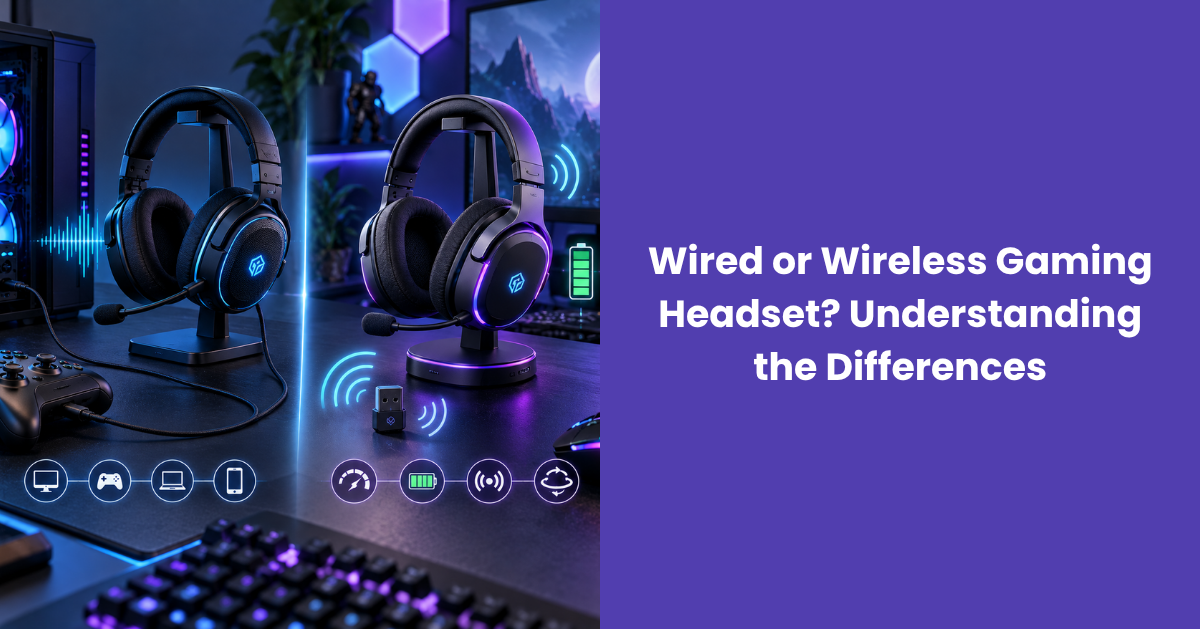
Both options can provide good audio performance, but they differ in connectivity, convenience, battery requirements, and how they fit into a gaming setup. Understanding these differences can make it easier to choose a headset that suits the way you play.
How Wired Gaming Headsets Work
A wired gaming headset connects directly to a gaming device using a cable. Depending on the headset and device, the connection might use a 3.5mm audio jack, USB, or another compatible connector.
The main advantage is that the headset does not need a battery. As long as the gaming device is powered and the connection is working, the headset can be used.
Wired models can also be straightforward to set up. Connect the headset to the appropriate port and configure the audio settings if necessary.
For gamers who spend long sessions playing at a desk, a wired connection can be a practical choice.
How Wireless Gaming Headsets Work
A wireless gaming headset connects to the gaming device without a traditional audio cable.
Different models use different wireless technologies. Some use a dedicated USB wireless transmitter, while others support Bluetooth. Dedicated wireless connections are often designed specifically for gaming and may offer features intended to reduce audio delay.
Wireless headsets contain batteries, so they need to be charged regularly. Battery life varies between models, and additional features such as lighting or active noise cancellation can affect how long a charge lasts.
Freedom of Movement
Wireless headsets provide greater freedom of movement because there is no cable connecting you to the gaming device.
This can be useful if you frequently move away from your desk, use a large television setup, or simply dislike cables around your gaming area.
A wired headset limits movement according to the length of its cable. However, for players who remain close to their computer or console, this may not be a significant disadvantage.
The importance of wireless freedom depends largely on your gaming environment.
Audio Delay and Connection Stability
Latency is an important consideration for gaming.
A wired connection generally sends the audio signal directly through the cable, which can provide a consistent connection with minimal delay.
Wireless gaming headsets can also provide low-latency performance, particularly models designed with dedicated gaming transmitters. However, wireless performance depends on the technology being used, the distance between the headset and transmitter, and potential sources of interference.
Bluetooth can be convenient, but not every Bluetooth connection is equally suitable for gaming. Check the headset's compatibility and latency specifications before buying.
Battery Life
Battery requirements are one of the clearest differences between wired and wireless headsets.
A wired model does not require charging. This makes it useful for long gaming sessions or situations where you do not want to monitor battery levels.
A wireless model needs to be charged. Battery life can range from several hours to considerably longer depending on the headset.
Before choosing a wireless headset, consider how long your typical gaming sessions last. A model with enough battery capacity for your normal usage can reduce interruptions.
Cable Management
Cable management can influence how tidy a gaming setup looks and feels.
A wired headset introduces another cable that needs to run between the headset and the gaming device. Depending on the setup, this cable can become tangled or catch on a chair or desk.
Wireless headsets eliminate the headset-to-device cable, which can make the desk area easier to manage.
However, wireless models still require a charging cable or charging dock, so they do not eliminate cables from the setup.
Microphone Performance
The microphone is important for multiplayer games, online meetings, and voice chat.
Both wired and wireless gaming headsets can have built-in microphones with different levels of clarity. Some include detachable microphones, flip-to-mute functions, noise reduction, or adjustable microphone settings.
Wireless transmission can affect microphone performance depending on the headset's technology and connection. Wired models may have fewer limitations in some setups.
Rather than assuming one connection type has the better microphone, compare the specifications and reviews of the individual models.
Compatibility
Compatibility should be checked before purchasing.
A wired headset with a standard 3.5mm connection may work with a range of computers, consoles, controllers, and mobile devices. USB headsets can have different compatibility requirements.
Wireless headsets can be more complicated because some are designed for specific platforms. A headset might support PC and PlayStation but not Xbox, for example.
Check the manufacturer's compatibility information for your exact device.
Comfort During Long Sessions
Connection type does not determine comfort, but it should still be part of the decision.
Look at the headset's weight, earcup design, headband, clamping force, and materials. A lightweight headset may be preferable for long sessions, while breathable ear cushions can be useful in warm environments.
Wireless models can sometimes weigh more because they contain a battery and additional electronics. This is not true of every model, so compare the actual weight rather than making assumptions.
Price and Overall Value
Wired headsets are available at many price points, including relatively inexpensive models. Wireless headsets often cost more because they include batteries, wireless hardware, and additional components.
However, price varies considerably across both categories.
Consider the features you actually need. Paying more for wireless connectivity may make sense if freedom of movement is important. If you play mainly at a desk, a high-quality wired headset may provide better value.
Which Gaming Headset Should You Choose?
A wired gaming headset may suit players who want a simple connection, consistent power, and no need to recharge a battery.
A wireless model may be preferable if you value freedom of movement, a cleaner desk setup, and the convenience of avoiding an audio cable.
Neither option is automatically better. Your gaming platform, playing habits, room layout, budget, and preferred features should determine the choice.
Conclusion
Choosing between a wired and wireless gaming headset comes down to how you use your equipment.
Wired models provide a straightforward connection without battery concerns, while wireless headsets offer greater freedom of movement and a cleaner setup. Both can provide strong audio and microphone performance when matched with the right gaming system.
Before buying, consider latency, battery life, compatibility, microphone quality, comfort, connectivity, and price. These factors will give you a better basis for choosing a headset than simply deciding between wired and wireless.
