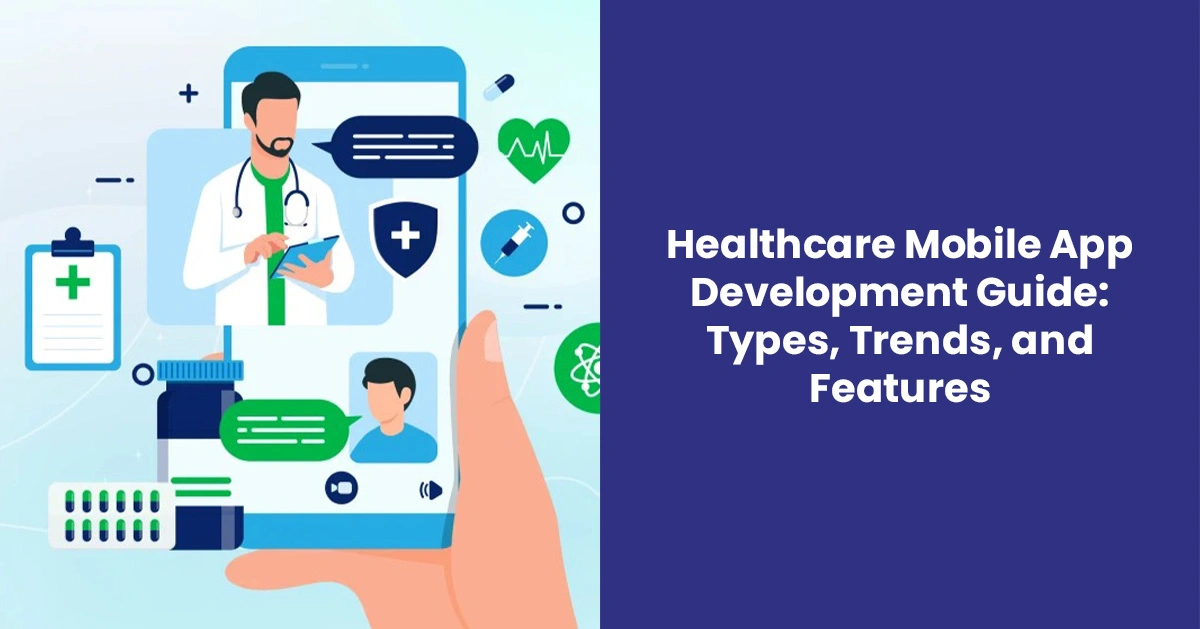
This comprehensive guide breaks down the types, trends, and features of healthcare mobile apps, and how providers can navigate development while ensuring compliance, usability, and security.
Why Healthcare Mobile Apps Matter
Mobile apps bridge the gap between patients, providers, and administrative staff. They enable:
- 24/7 access to health records
- Real-time communication between doctors and patients
- Remote patient monitoring
- Streamlined billing and scheduling
- Increased adherence to treatment plans
A well-designed mobile app improves engagement, reduces operational inefficiencies, and helps deliver care beyond the clinic walls.
Common Types of Healthcare Mobile Apps
There are several categories of mobile healthcare apps, each tailored to a specific user group or function:
1. Patient-Facing Apps
These apps are designed with patient usability in mind. Core functionalities include:
- Booking appointments
- Virtual consultations (telehealth)
- Viewing lab results and health records
- Medication reminders
- Fitness and wellness tracking
Some also include symptom checkers and health risk assessments powered by AI.
2. Doctor and Provider Apps
These apps assist providers in delivering more accurate and timely care. Features typically include:
- Electronic Health Record (EHR) access
- Clinical decision support
- Secure messaging with patients and other clinicians
- Access to medical references and drug databases
3. Administrative Apps
3. Revolutionizing Radiology and Imaging
Targeted at clinic and hospital staff, these apps help with:
- Appointment scheduling
- Staff rostering
- Insurance verification
- Payment tracking and Laboratory Billing Services
Such apps reduce administrative burdens, especially when integrated with backend systems like revenue cycle management platforms.
4. Remote Monitoring Apps
Used primarily for chronic disease management or post-surgery recovery, these apps collect and transmit data such as:
- Heart rate
- Glucose levels
- Blood pressure
- Physical activity
They enable real-time intervention, helping prevent hospital readmissions and complications.
5. Medical Education & Training Apps
Developed for students and healthcare professionals, these include:
- Virtual dissection labs
- Procedure simulations
- Continuing education modules
They serve as mobile learning environments, especially vital in today’s remote-learning era.
Emerging Trends in Healthcare App Development
The mobile health space is continuously evolving. Here are the biggest trends driving innovation in 2025:
1. AI and Predictive Analytics
Apps are now integrating AI-powered chatbots, symptom checkers, and diagnostics. Predictive analytics help identify at-risk patients and recommend preventive measures.
2. Integration with Wearables
Smartwatches and fitness bands are now commonplace. Mobile apps integrate with these wearables to track vitals and sync data in real time for remote monitoring and physician review.
3. Telehealth and Virtual Care
Spurred by the pandemic and continued demand for convenience, telemedicine functionality has become a staple. Integrated video calls, secure messaging, and e-prescribing are now baseline expectations.
4. Blockchain for Data Security
To ensure secure and immutable medical records, developers are exploring blockchain integration. It supports decentralized storage, enhancing patient control over health data.
5. Voice Technology and NLP
Voice-command features powered by NLP (Natural Language Processing) are becoming more prevalent. They help patients with disabilities or elderly users navigate app functions more easily.
6. Cloud-Based Backend
Cloud infrastructure enables scalable storage and data accessibility across devices. It’s especially valuable for multi-location healthcare providers with centralized systems.
Must-Have Features in Healthcare Mobile Apps
When building a mobile healthcare app, certain features are considered non-negotiable for usability, compliance, and efficiency.
1. User Authentication and Role-Based Access
Security begins with robust login systems—multi-factor authentication, biometric access, and encryption. User roles should define access to different data types.
2. EHR Integration
Seamless access to patient records is vital. Apps should integrate with existing or popular EHR systems for continuity of care and minimized data entry errors.
3. HIPAA-Compliant Messaging
All communication, especially patient-provider interactions, must adhere to HIPAA guidelines. End-to-end encryption and secure data storage are critical.
4. Appointment Scheduling and Reminders
Patients should be able to view available slots, book appointments, and receive automatic reminders—reducing no-shows and administrative workload.
5. Lab and Imaging Results Access
Apps should allow patients to view their test results, including Laboratory Billing Services breakdowns, within a secure and user-friendly interface.
5. Lab and Imaging Results Access
Apps should allow patients to view their test results, including Laboratory Billing Services breakdowns, within a secure and user-friendly interface.
5. Lab and Imaging Results Access
Apps should allow patients to view their test results, including Laboratory Billing Services breakdowns, within a secure and user-friendly interface.
6. Billing and Payments Module
Patients expect transparent billing experiences. The app should support:
- Invoice breakdown
- Insurance verification
- Online payment gateways
- Subscription or co-pay tracking
For providers, apps with integrated billing modules simplify workflows and are often used by the best Medical Billing Companies to ensure accuracy and compliance. Providers can also look to organizations such as Prosperity Behavioral Health for specialized support with behavioral healthcare billing.
7. Push Notifications and Alerts
Whether it’s a medication reminder, upcoming appointment, or a test result update—timely notifications help improve engagement and adherence.
8. Offline Functionality
Healthcare isn’t always delivered with perfect connectivity. Apps should offer limited offline access with data syncing once reconnected.
9. Multi-language Support
For practices in diverse communities, offering app functionality in multiple languages increases accessibility and improves health outcomes.
Choosing the Right Development Approach
There are three main paths to developing your app:
1. Native Apps
- Built specifically for iOS or Android.
- Superior performance and smoother UI.
- Higher development cost and longer timelines.
2. Hybrid Apps
Built using web technologies (like React Native).
- Built using web technologies (like React Native).
- One codebase, cross-platform compatibility.
- Cost-effective, but may lack native-like performance.
3. Progressive Web Apps (PWAs)
- Lightweight and browser-based.
- Easily accessible across devices without downloads.
- Best suited for informational tools rather than complex medical apps.
Building a Healthcare App: Step-by-Step Process
1. Define the Use Case and User Personas
Start with understanding the problem you're solving and who your users are—patients, providers, or administrators. This will define your app’s scope and design.
2. Choose a Tech Stack
Select the right technologies, frameworks, and APIs—prioritize security, scalability, and performance.
3. Design UI/UX
A clean, intuitive, and accessible interface increases app adoption. Follow healthcare UX best practices like high-contrast visuals, easy navigation, and ADA compliance.
4. Develop and Integrate Systems
Develop modules in sprints—authentication, EHR, billing, notifications. Use secure APIs for third-party services like payment gateways or lab integrations.
5. Test Thoroughly
Conduct functional, security, and usability testing. Simulate real-world conditions and ensure all HIPAA, GDPR, and regional standards are met.
6. Launch and Monitor
Use MDM (Mobile Device Management) tools for updates and patch management. Monitor user engagement, app performance, and crash reports in real time.
The CureMD Advantage
If you're considering a partner for app development or integrations, look for one with a proven track record. CureMD, known as one of the best Medical Billing Companies, also offers seamless mobile app integrations for EHR and Laboratory Billing Services, helping practices provide a consistent patient experience across digital touchpoints.
With a focus on interoperability, compliance, and intuitive design, CureMD’s mobile solutions empower providers to scale care without compromising efficiency or security.
Final Thoughts
Healthcare mobile apps are no longer a nice-to-have—they're an expectation. From simplifying patient interactions to enhancing clinical workflows, mobile apps can be a game-changer when executed correctly.